Table of Contents
- 1. Immediate Water Extraction: Remove Standing Water First
- 2. Deploy Industrial-Grade Dehumidifiers for Moisture Control
- 3. Maximize Air Circulation and Ventilation
- 4. How to Remove Water from Carpet and Porous Materials
- 5. Sanitize and Prevent Mold: Signs of Mold After Basement Flood
- Safety Precautions During Flood Cleanup
- When to Call a Professional for Flooded Basement Restoration
- Conclusion
Last Updated: August 29, 2026
5 Best Ways to Dry Out Flooded Basement Quickly
When water floods your basement, every hour matters. Standing water damages foundations, warps flooring, and creates conditions for mold to colonize within 24-48 hours (the CDC). The faster you extract moisture and restore proper humidity levels, the better your chances of preventing structural damage and costly mold remediation.
At Aquaflame Restores it, we’ve responded to hundreds of basement floods across metro Atlanta. Below, we’ll walk you through the five most effective methods to dry out flooded basement conditions rapidly, from immediate water extraction to long-term moisture control, plus the safety precautions that protect you during cleanup.
1. Immediate Water Extraction: Remove Standing Water First
The first 24 hours are critical. Every minute that standing water sits in your basement, it’s seeping into foundations, soaking into drywall, and creating the perfect environment for mold. Your goal is simple: get that water out as fast as possible.
Using a Sump Pump for Large Volumes
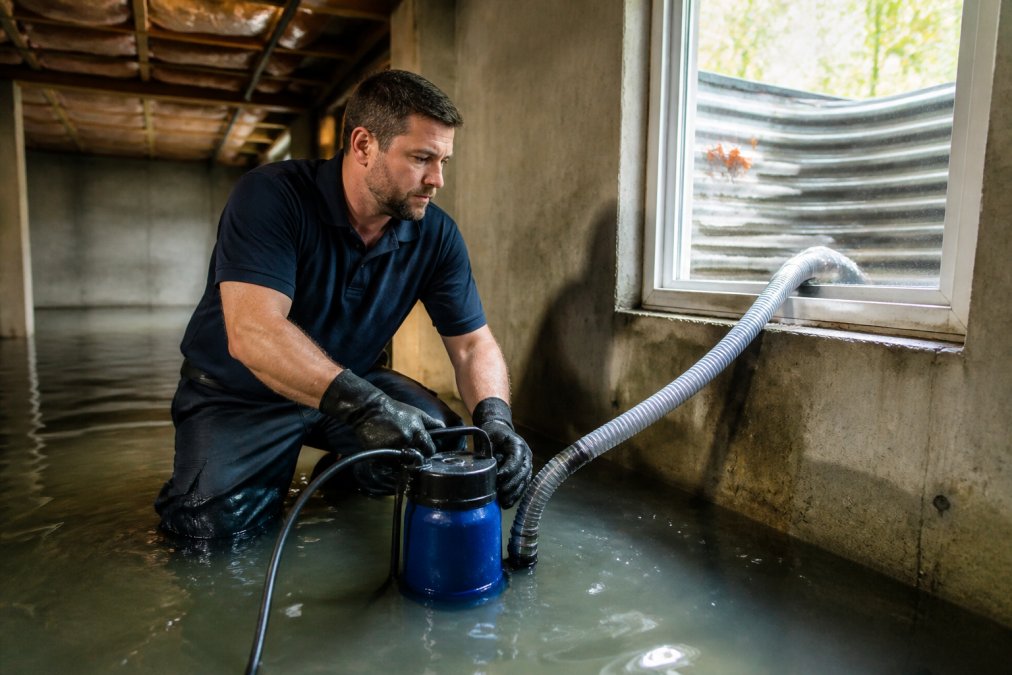
For serious flooding, more than a few inches of standing water, a submersible sump pump is your most effective tool. These pumps sit directly in the water and can move hundreds of gallons per hour out of your basement and away from your foundation.
Position the pump in the lowest point where water collects. Run the discharge hose to daylight (an open area where water can drain naturally) or to a storm drain if your municipality permits it. Never discharge water directly against your foundation. For large floods, commercial-grade pumps rated for higher gallons-per-minute output work best.
Wet/Dry Vacuums for Smaller Areas
Once the bulk of standing water is gone, a wet/dry vacuum handles remaining puddles and moisture. Models like the CRAFTSMAN CMXEVBE17595 16-gallon wet/dry vac are designed specifically for water extraction. Pair it with an external pump attachment like the DEWALT DXVPA101 for continuous operation without stopping to empty the tank. The DEWALT pump moves 11 gallons per minute and can lift water up to 60 feet.
Wet/dry vacuums are finishing tools, not primary tools for serious flooding. Use them after your sump pump has removed the bulk of standing water. Trying to handle a flooded basement with only a wet/dry vacuum will take days.
2. Deploy Industrial-Grade Dehumidifiers for Moisture Control
After standing water is gone, your basement still holds massive amounts of moisture trapped in drywall, insulation, concrete, and the air itself. A standard household dehumidifier won’t cut it. You need industrial-grade equipment.
Dehumidifiers work by pulling moist air across cold coils, condensing moisture into water droplets that drain away, and releasing dry air back into the space. An industrial dehumidifier like the Moiswell 250-pint commercial unit removes moisture at a rate measured in pints per day. A 250-pint dehumidifier pulls 250 pints (about 12.5 gallons) of water from the air every 24 hours, the difference between a basement that dries in two weeks and one that stays damp for months.
Sizing and Placement for Maximum Coverage
For a typical 1,500-square-foot basement that’s been flooded, you’ll want a 150-200 pint capacity unit running continuously. For larger spaces or very wet conditions, use two 150-pint units or one 250-pint unit.
Position the dehumidifier in a central location where air can circulate freely around the intake. Don’t push it into a corner; air needs to flow into the unit from all sides. If your basement has multiple rooms or sections, one central dehumidifier won’t reach all areas effectively.
The AlorAir Storm Pro uses low-grain refrigerant (LGR) technology, which means it continues removing moisture effectively even in cooler conditions. This matters in basements where temperatures may drop at night. Dehumidifiers produce heat as a byproduct, which is beneficial during drying because warmer air holds more moisture and evaporates water faster.
Most professionals aim to bring relative humidity down to 50% or lower. Anything above 60% creates conditions where mold can grow (the EPA).
3. Maximize Air Circulation and Ventilation
Standing dehumidifiers alone won’t dry your basement. You need air movement. Stagnant air becomes saturated with moisture and stops evaporating water from surfaces. Moving air continuously replaces saturated air with drier air, accelerating evaporation.
Using Air Movers Strategically
Air movers (also called fans or blowers) are industrial-grade fans designed to move large volumes of air at high velocity. The B-Air Firtana-20X is a compact air mover popular with homeowners and professionals. Position air movers to create cross-flow: air entering from one side of the basement and exiting from the other. Aim air movers at wet surfaces, drywall, carpet, and concrete to accelerate surface evaporation.
For a basement that’s 30 feet long, use two or three air movers creating directional flow from one end to the other.
Opening Windows and Creating Cross-Flow
If weather permits, open basement windows and doors to create natural ventilation. Outside air on dry days is often less humid than indoor air. However, on humid days, opening windows is counterproductive, you’re pulling humid outside air into an already-wet basement. Save window ventilation for dry days or nights when outdoor humidity is lower.
The best approach combines mechanical and natural ventilation: run dehumidifiers and air movers continuously, and supplement with window ventilation on dry days.
4. How to Remove Water from Carpet and Porous Materials
Carpet, drywall, insulation, and wood are porous materials that absorb water like sponges. Once water is gone from the floor, these materials still hold moisture deep inside their structure.
Extraction vs. Replacement Decisions
For carpet, the decision is urgent. Carpet that’s been wet for more than 24-48 hours often cannot be saved (peer-reviewed research). Water promotes mold growth within porous fibers, and even if you extract the water and dry the carpet, mold spores may already be colonizing the material. Professional water damage restoration companies typically recommend replacing carpet that’s been submerged or heavily saturated for more than a day.
If the carpet was only lightly dampened, extraction may work. Use a wet/dry vacuum or commercial carpet extraction machine to pull as much water as possible, then run air movers directly over the carpet and position a dehumidifier nearby. Lift carpet edges to allow air to reach the underpadding and subfloor.
Treating Wet Drywall and Insulation
Drywall absorbs water readily and dries slowly because moisture is trapped within the material. If drywall has been submerged or heavily saturated, it will need to be removed and replaced. Drywall that’s been wet up to 12 inches from the floor is generally removed and replaced.
Insulation is even worse. Once insulation absorbs water, it loses all thermal value and becomes a mold incubator. Standard fiberglass insulation should be removed and replaced. For both drywall and insulation, removal and replacement is the safest approach.
5. Sanitize and Prevent Mold: Signs of Mold After Basement Flood
Once water is extracted and drying is underway, sanitization becomes critical. Floodwater often contains sewage, chemicals, or other contaminants that create health hazards. Mold growth begins within 24-48 hours if conditions remain moist.
Disinfecting Surfaces and Contaminated Areas
All surfaces that contacted floodwater should be disinfected. Use a solution of one part bleach to ten parts water, or a commercial disinfectant rated for water damage cleanup. Spray or wipe down concrete floors, basement walls, and any surfaces that were submerged.
Pay special attention to areas where sediment (silt) has settled. Floodwater carries fine particles that deposit on surfaces as water evaporates. This silt harbors bacteria and mold spores. For contaminated areas involving sewage backup, professional sanitization is essential. Sewage-contaminated water poses serious health risks. Contact a professional restoration company like Aquaflame Restores it that has proper equipment and training for biohazard cleanup.
Monitoring Humidity to Prevent Regrowth
Mold prevention hinges on one metric: relative humidity. Keep your basement at 50% relative humidity or lower, and mold won’t grow. Allow humidity to climb above 60%, and mold will colonize any damp surface.
Use a moisture meter to monitor relative humidity. Continue running dehumidifiers until humidity consistently stays below 50% for at least 48 hours. Watch for signs of mold: dark spots or discoloration on walls, a musty smell, or visible fuzzy growth on surfaces. If mold appears, it indicates your drying strategy isn’t working and you may need additional dehumidifiers or professional intervention.
Safety Precautions During Flood Cleanup
Flood cleanup is hazardous. Contaminated water, electrical hazards, and structural instability all pose serious risks.
Electrical Hazards and Hazard Identification
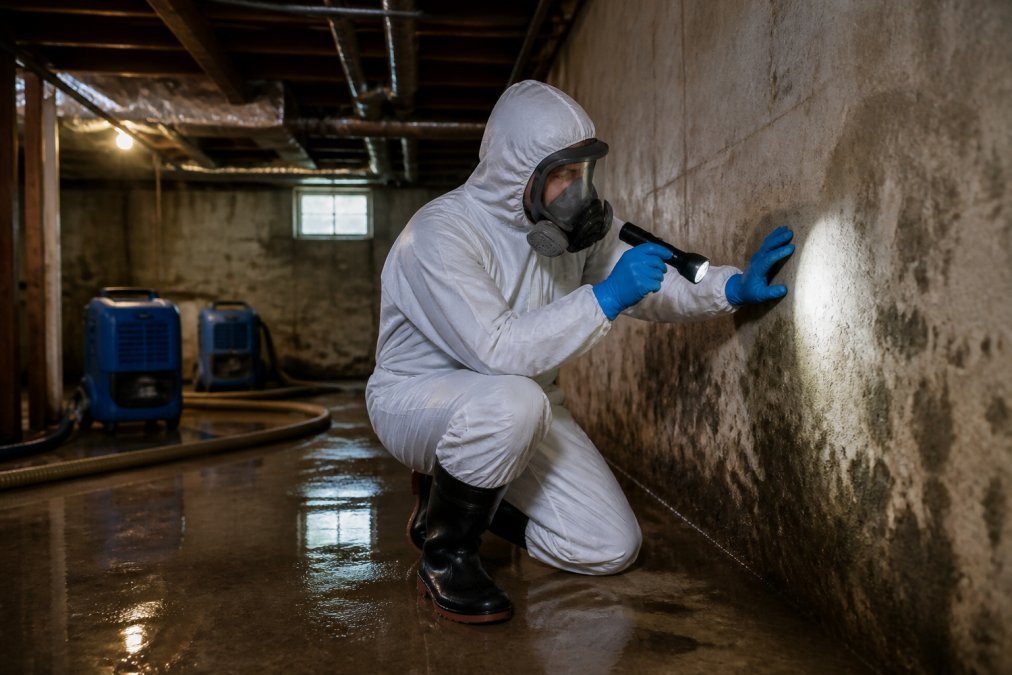
Do not enter a flooded basement without first shutting off electrical power to the space. Water and electricity are a lethal combination. Turn off the circuit breaker for your basement before entering.
Even after power is off, be aware of hazards: wet insulation on electrical wires can cause electrocution, submerged electrical outlets and appliances remain hazardous even if power is off, and structural damage from water may have weakened floors or walls. If you see standing water and are unsure whether electrical hazards exist, don’t enter. Call a professional.
PPE and Respiratory Protection
Floodwater is contaminated. Wear appropriate personal protective equipment: gloves (nitrile or rubber), boots, eye protection, and a respirator or N95 mask if there’s visible mold or dusty conditions. For sewage-contaminated water or visible mold, use a P100 respirator for stronger protection against mold spores and airborne pathogens.
Change clothes and wash thoroughly after cleanup. Contaminated water can carry bacteria and viruses that cause illness.
When to Call a Professional for Flooded Basement Restoration
DIY drying works for minor water events, a small leak caught quickly or splash damage from a burst pipe. For serious flooding, professional restoration is faster, safer, and more effective.
Professional restoration companies have industrial-grade equipment, trained technicians, and insurance to handle the job properly. They’ll extract water in hours rather than days and deploy multiple dehumidifiers and air movers simultaneously.
Aquaflame Restores it offers 24/7 emergency response with a 30-minute arrival guarantee across metro Atlanta. Our IICRC-trained technicians handle water extraction, structural drying, mold remediation, and full reconstruction. We manage direct insurance billing, so you’re not juggling payments while dealing with damage.
Insurance Documentation and Claims Support
Professional restoration provides proper documentation for your insurance claim. Insurance adjusters require detailed photos, moisture readings, and professional assessment of damage. Professionals can identify hidden damage, moisture trapped in walls, insulation, or crawl spaces, that homeowners miss. Insurance may cover restoration of hidden damage if it’s properly documented by a professional.
Keep records of all water damage: photos of standing water, flooded areas, and damaged materials. Document the date and time water was discovered. If you hire a professional, get a detailed estimate and scope of work in writing.
Flooded basements demand speed and the right tools. Start with immediate water extraction using a sump pump or wet/dry vacuum, deploy industrial dehumidifiers to control moisture, maximize air circulation with air movers, remove unsalvageable materials like carpet and saturated drywall, and sanitize to prevent mold. For serious flooding, professional restoration saves time and prevents costly mistakes. Contact Aquaflame Restores it for 24/7 emergency response and expert water damage restoration across metro Atlanta. Our IICRC-trained team handles complete water extraction, structural drying, and full reconstruction with direct insurance billing, restoring your home to its original condition with speed and professional expertise.
Frequently Asked Questions
Q: What is the fastest way to dry a flooded basement?
A: The fastest approach combines three simultaneous steps: immediate standing water extraction using a sump pump or wet/dry vacuum, industrial dehumidifiers to control moisture, and air movers to increase circulation. Water extraction removes bulk water within hours, while dehumidifiers and air circulation address residual moisture trapped in walls, carpets, and foundation materials. For severe flooding, professional restoration teams with commercial-grade equipment can complete structural drying in 3-7 days, whereas DIY methods typically take 2-4 weeks.
Q: How do I remove water from carpet after a basement flood?
A: Start by extracting standing water with a wet/dry vacuum or pump-equipped system. For water-logged carpet, use a submersible pump to drain pooled water, then employ powerful air movers positioned to force air underneath and through the carpet fibers. Industrial dehumidifiers reduce relative humidity to 30-50%, accelerating evaporation. If carpet has been saturated for more than 24-48 hours, particularly with contaminated water, removal and replacement is often necessary to prevent mold and odor. Porous materials like carpet backing and padding absorb water deeply; professional extraction equipment can save salvageable carpet, but sewage-contaminated water requires disposal.
Q: What are the signs of mold after a basement flood?
A: Mold typically appears within 24-72 hours of water exposure. Early signs include a musty odor, visible black or greenish spots on walls, drywall, or insulation, and discoloration on porous surfaces. Mold thrives in relative humidity above 60%; if your basement hasn't dried fully after a flood, mold growth is likely. Health indicators include respiratory irritation, allergic reactions, or worsening asthma. Inspect crawlspaces, behind walls, and under flooring where moisture lingers. If mold covers more than 10 square feet or involves HVAC systems, professional mold remediation is necessary. Moisture meters reading above 16-20% in building materials indicate conditions supporting mold.
Q: How long does it take to dry out a basement after a flood?
A: Drying time depends on flood severity, humidity levels, and equipment used. Professional restoration with industrial dehumidifiers and air movers typically completes structural drying in 3-7 days. DIY drying with standard dehumidifiers and fans may take 2-4 weeks. Factors affecting duration include water volume, temperature, ventilation, material porosity, and whether contaminated water (sewage) is involved. Monitoring with moisture meters helps track progress; materials should reach 16-20% moisture content before reconstruction begins. Basements with poor drainage or high water tables may require ongoing moisture management.
Q: When should I call a professional for basement water damage?
A: Call a professional immediately if water depth exceeds 2-3 inches, if sewage or contaminated water is involved, if electrical systems are affected, or if you cannot safely access the flooded area. Professionals are essential when mold is visible, when structural damage is suspected, or when drying extends beyond 7-10 days with DIY methods. For insurance claims requiring documentation and direct billing coordination, professional restoration teams handle the entire process, from water extraction to reconstruction. IICRC-certified technicians assess water damage categories, identify hidden moisture, and prevent costly long-term issues like foundation damage or mold remediation.
This article was written using GrandRanker