Table of Contents
- Immediate Actions in the First 24 Hours After a Flood
- Understanding the 24-48 Hour Window for Mold Prevention
- How to Remove Water From Carpet and Flooring
- Factors That Influence How Long to Dry Out a House
- Professional Structural Drying Equipment and Methods
- Signs of Mold After Water Damage and Hidden Moisture Detection
- DIY vs. Professional Drying: When to Call an Expert
- Verifying Complete Dryness and Insurance Documentation
- Frequently Asked Questions
Immediate Actions in the First 24 Hours After a Flood
The first 24 hours after a flood are critical. Every minute counts, the longer water sits in your home, the higher your risk of mold, structural damage, and costly repairs.
Start by shutting off the main water supply if the flood came from a burst pipe. If water is rising or you’re unsafe, evacuate immediately and call emergency services. Once safe, document everything with photos and video for your insurance claim. Open windows and doors for air circulation and turn off electricity to affected areas if water has reached outlets or appliances.
Call a professional water damage restoration company right away. At Aquaflame Restores it, we understand that early extraction is critical. Our team responds within 30 minutes in metro Atlanta and begins water removal the same day. Early extraction removes standing water and prevents it from soaking deeper into materials, dramatically reducing drying time and mold risk.
Begin removing wet items if you can do so safely. Furniture, documents, and personal belongings should be moved to dry areas or outside. If you have wet carpet, pull it back from the edges to expose the subfloor and padding underneath, allowing air to circulate and preventing moisture from being trapped.
Do NOT use bleach on wet materials or drywall. Bleach does not prevent mold in wet environments, it only kills surface mold. Mold prevention depends on drying, not disinfection. Applying bleach to wet materials can trap moisture and make the problem worse.
Understanding the 24-48 Hour Window for Mold Prevention
Mold can begin growing within 24 to 48 hours of water exposure (the CDC). This window is your best opportunity to prevent a mold problem from developing. Mold thrives in damp environments with relative humidity above 60 percent and organic material to feed on (the EPA). Drywall, carpet, wood framing, and insulation all provide food. If these materials stay wet or damp for more than two days, mold spores will colonize and spread.
The 24-48 hour window is when professional intervention makes the biggest difference. Industrial dehumidifiers and air movers work together to pull moisture out of materials and prevent mold germination. Commercial-grade equipment maintains relative humidity below 50 percent where mold cannot grow (the CDC). If you wait beyond 48 hours before aggressive drying begins, you’re no longer preventing mold, you’re managing an active infestation. Prevention is always cheaper and faster than remediation.
Set up fans immediately to create air movement, even before professional equipment arrives. Box fans, ceiling fans, or any fan that pushes air across wet surfaces helps evaporation. Stagnant air allows moisture to settle and mold to grow.
How to Remove Water From Carpet and Flooring
Carpet is one of the most water-absorbent materials in your home. A typical carpet can hold several gallons of water per square foot, making water removal critical to salvaging flooring.
Start with extraction using a wet vacuum or commercial water extraction machine. A commercial extractor removes water deep in the pile and from the backing. If the carpet is only damp, extraction alone may save it. If it’s been wet for more than 24 hours, the padding underneath has likely absorbed water and begun to break down, replacement is usually necessary.
After extraction, pull the carpet back and remove the padding. Wet padding decomposes and becomes a mold breeding ground. Once removed, you can assess whether the subfloor is salvageable. Concrete subfloors can be dried; wood subfloors wet for more than a few hours may be permanently damaged.
For hard flooring like tile or vinyl, water often sits underneath rather than on top. Use a moisture meter to check subfloor moisture content after the surface appears dry. If readings remain high, the subfloor is still wet and needs continued dehumidification.
| Flooring Type | Extraction Method | Drying Time | Salvage Likelihood |
|---|---|---|---|
| Carpet with padding | Commercial extractor, remove padding | 5-7 days (padding replaced) | 40-60% if caught early |
| Hardwood | Extract, then dehumidify with air movers | 7-14 days | 30-50% depending on exposure time |
| Tile/Vinyl | Extract grout lines, dehumidify subfloor | 3-7 days | 80%+ if subfloor dries quickly |
| Concrete | Extract surface, dehumidify | 5-10 days | 90%+ (concrete is durable) |
The goal after extraction is to create conditions where water evaporates faster than it can be absorbed. This requires both air movement and dehumidification.
Factors That Influence How Long to Dry Out a House
How long to dry out a house after a flood depends on several factors beyond just the amount of water.
Water category matters. Clean water from a burst pipe dries faster than contaminated water. Greywater from washing machines contains bacteria and requires sanitization. Blackwater from sewage is hazardous and requires professional remediation.
Material composition affects drying time significantly. Concrete dries faster than wood. Drywall absorbs water and releases it slowly. A basement with concrete floors might dry in 5-7 days, while a finished basement with drywall and insulation could take 14-21 days or longer.
Humidity and temperature determine evaporation rate. Hot, dry weather accelerates evaporation. Cold, humid weather slows it dramatically. Winter floods with temperatures below 50 degrees and high indoor humidity dry much slower without dehumidification equipment.
Air circulation is essential. Stagnant air allows moisture to accumulate. Industrial air movers create the velocity needed to move moisture away from materials and toward dehumidifiers.
Extent of saturation determines the timeline. Water that reached only the first inch of drywall dries faster than water soaked through multiple layers. Water in wall cavities is invisible but can take weeks to dry.
Do not assume your house is dry because visible water is gone. Moisture often hides inside walls, under flooring, and in structural cavities. Homes that appear dry on day 5 can develop mold on day 10 if hidden moisture wasn’t addressed.
Professional Structural Drying Equipment and Methods
Professional water damage restoration relies on equipment that homeowners cannot operate effectively without training.
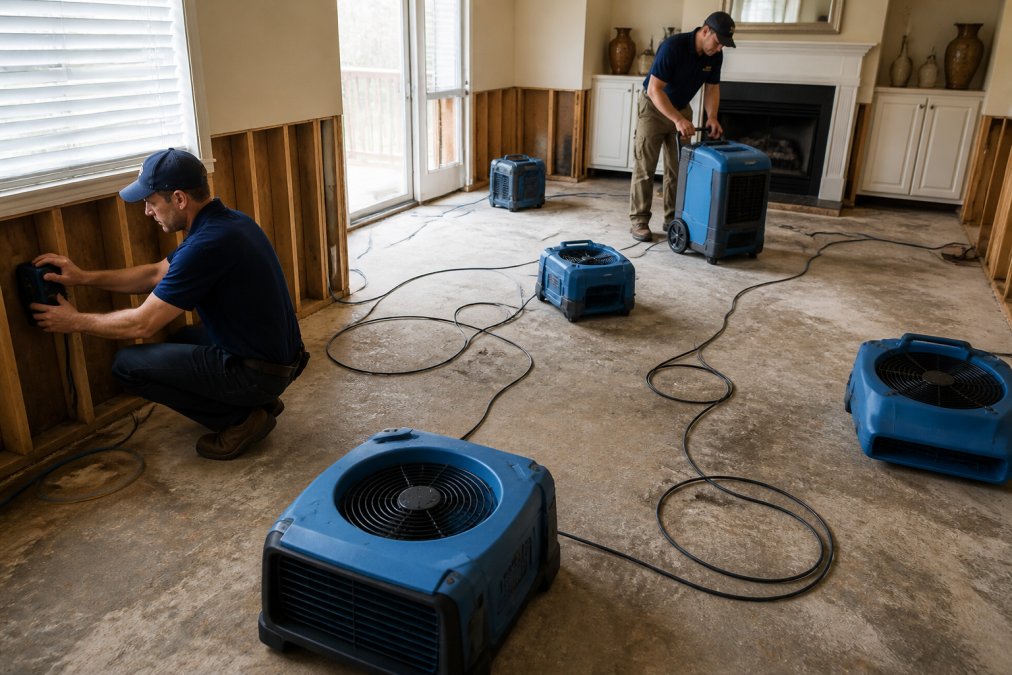
Dehumidifiers remove moisture from the air. Professional-grade dehumidifiers move 150-400 cubic feet of air per minute and extract 20-50 gallons of water per day, far more than household units. Refrigerant dehumidifiers work well in warm temperatures; desiccant dehumidifiers work in any temperature, making them better for winter floods.
Air movers create high-velocity air movement across wet surfaces, accelerating evaporation by moving moist air away from materials. Positioned correctly, they break up the boundary layer of still air around wet materials.
Moisture meters measure water content in materials. Readings guide equipment placement and tell you when drying is complete. Materials should reach equilibrium moisture content, typically 12-15 percent for wood, 0.5-1.5 percent for concrete, before the space is considered dry.
Thermal imaging cameras reveal moisture patterns by detecting temperature differences. Wet materials are cooler than dry ones, showing exactly where water is hiding inside walls and under flooring. indoor air quality.
Structural drying requires sustained equipment operation, often 5-14 days depending on saturation. Equipment must run continuously. Aquaflame Restores it deploys this equipment immediately, assesses moisture levels, and configures equipment for maximum efficiency while monitoring progress daily.
Signs of Mold After Water Damage and Hidden Moisture Detection
Mold becomes visible within 24-72 hours of water exposure, but by then the problem is established. Preventing mold is far easier than removing it.
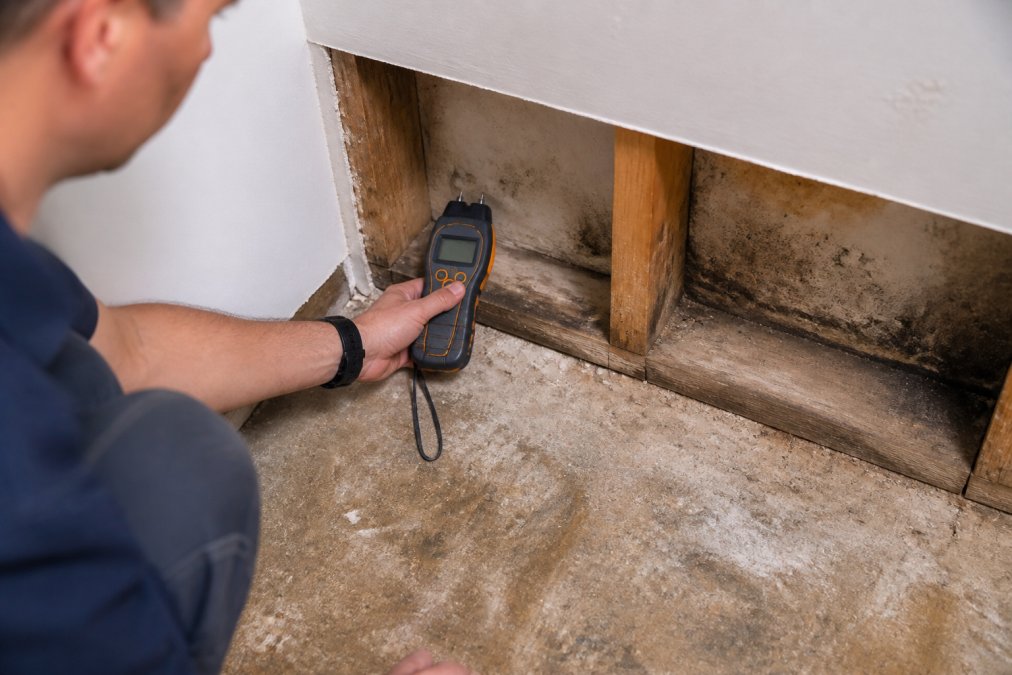
Visual mold appears as black, green, or white spots on surfaces. It often grows on drywall, wood, carpet, and around baseboards. Visible mold is only the surface problem, the colony extends deeper into materials.
Musty odors indicate mold growth, even if you can’t see it. The smell comes from microbial volatile organic compounds released as mold metabolizes. If your home smells damp after a flood, mold is likely growing in hidden spaces.
Discoloration on walls or ceilings suggests moisture. Stains indicate the material has absorbed water and is at risk for mold if it remains damp.
Hidden moisture is the real problem. Water trapped inside walls, under flooring, or in crawlspaces creates ideal conditions for mold. A reading above 20 percent moisture content in drywall or wood means mold risk is high. Readings above 25 percent mean mold is likely already growing.
Crawlspaces are notorious moisture traps. They’re poorly ventilated, stay cool, and collect ground moisture. Mold in crawlspaces spreads to joists, insulation, and the floor above.
The key to preventing mold is drying materials below 20 percent moisture content within the first 48 hours. Once mold establishes itself, remediation involves removing affected materials and addressing the moisture source, significantly more expensive than prevention.
DIY vs. Professional Drying: When to Call an Expert
The decision to handle drying yourself or hire professionals depends on the extent of water damage, your access to equipment, and your timeline.
Call a professional immediately if:
- Water depth exceeds 6 inches
- Contaminated water is involved
- Water has reached electrical panels, furnaces, or HVAC systems
- The affected area exceeds 1,000 square feet
- You have materials that dry slowly (hardwood, carpet, insulation)
- You’re in a humid climate or it’s cold outside
- You need insurance documentation and clearance
DIY drying might work if:
- Water damage is minimal (less than 500 square feet)
- Only clean water is involved
- You caught it within 24 hours
- The weather is warm and dry
- You can monitor moisture levels with a moisture meter
- You’re willing to run equipment continuously for 7-14 days
The math often favors professional help. Renting commercial equipment costs can vary. Professional restoration typically finishes faster, reduces mold risk, and provides insurance documentation. If your insurance covers water damage (most policies do), professional restoration is often covered partially or fully.
Aquaflame Restores it handles extraction, dehumidification, mold prevention, and reconstruction. Our IICRC-trained technicians manage insurance claims directly, so you’re not fighting with your insurer while your house dries. We provide moisture readings and clearance documentation, which lenders and insurance companies require.
The real cost of DIY drying is the risk of incomplete drying, hidden mold, and structural damage that shows up months later. Professional drying prevents far more expensive problems down the road.
Verifying Complete Dryness and Insurance Documentation
A home is not truly dry until moisture levels are verified. “Looks dry” and “feels dry” are not standards.
Moisture meters provide objective measurements. Readings should be taken at multiple depths and locations:
- Drywall should be 12-15 percent moisture content
- Wood should be 12-18 percent
- Concrete should be below 3 percent
- Subfloors should be 15-17 percent
If readings remain above these thresholds, the material is still wet. Most professionals wait until readings have stabilized for 24 hours before declaring the space dry.
Thermal imaging confirms no hidden moisture pockets. A final thermal scan should show uniform temperatures across all surfaces, indicating complete drying.
Insurance documentation is critical for claims. Your insurance company needs photos and video of damage, documentation of water removal and drying efforts, final moisture meter readings, clearance from a mold inspector, and receipts for all restoration work. Professional restoration companies provide this documentation as part of their service.
Post-drying verification prevents future problems. Before moving back in, have a mold inspector conduct post-remediation verification, request air quality testing if mold was present, verify HVAC systems have been cleaned, and check that structural repairs are complete.
After a flood, how long to dry out a house depends on immediate action, proper equipment, and professional oversight. The difference between quick recovery and months of problems often comes down to the first 48 hours. Contact Aquaflame Restores it immediately when water damage occurs. Our 30-minute response guarantee means professional extraction and dehumidification begin within hours, not days. Our IICRC-trained technicians manage insurance claims directly, provide moisture verification and clearance documentation, and handle complete reconstruction if needed. Call 24/7 for emergency water damage restoration.
Frequently Asked Questions
How long does it take to dry out a flooded house?
Drying time depends on flood severity, materials affected, and humidity levels. Most homes take 5-14 days with professional equipment. Small water damage may dry in 3-5 days; severe structural saturation can extend to 3-4 weeks. The 24-48 hour window after water extraction is critical, mold growth accelerates rapidly without proper dehumidification and air circulation during this period.
What equipment is most effective for structural drying?
Professional structural drying equipment includes industrial dehumidifiers, air movers (fans), and moisture meters. Dehumidifiers reduce relative humidity levels that promote mold growth, while air movers increase evaporation rates and air exchange throughout the space. Moisture meters measure water content in materials like drywall and subfloor to confirm when drying is complete. This combination addresses both surface and latent moisture that DIY methods typically miss.
How do I know if my house is fully dried out?
A fully dried house shows relative humidity below 50%, no musty odors, and moisture meter readings below 16% in structural materials. Check for soft spots in drywall, discoloration, or warping, these indicate ongoing moisture. Use a hygrometer to monitor humidity levels daily. Professional verification uses thermal imaging to detect hidden moisture in walls and under flooring. This documentation is essential for insurance claims and preventing future mold remediation costs.
When should I hire a professional instead of drying the house myself?
Hire professionals immediately if water covers more than 1,000 square feet, involves sewage (category 3 water), or affects structural materials like subfloor and drywall. Professionals have industrial-grade equipment and expertise to prevent hidden moisture and mold in walls and under flooring. They also provide insurance-ready documentation and can coordinate reconstruction. DIY methods typically fail to achieve the low humidity and air exchange rates needed to prevent mold growth in 24-48 hours.
This article was written using GrandRanker