
Last Updated: November 4, 2026
Quick Summary
A water damage proof of loss must include your policy number, the date and cause of loss, an itemized list of damaged property with values, contractor repair estimates, and your notarized signature under oath. Back it with receipts, photos, and a room-by-room inventory so your adjuster can move the claim forward.
- The proof of loss form asks for five core things, including an itemized list of damaged property and your signature under oath.
- Get at least two written contractor estimates before filing your proof of loss.
- Photograph standing water, the source, and every affected room before you move or toss anything.
- Record quantity, age, condition, original cost, and both actual cash value and replacement cost for each item.
- Common proof of loss submission windows are 60 days, per your policy language.
Table of Contents
- What to Include in a Water Damage Proof of Loss
- The Water Damage Proof of Loss Form: What It Asks For
- Water Damage Claim Supporting Documents You Need to Gather
- Photos for Water Damage Insurance Claim: What to Capture
- Water Damage Claim Inventory Examples for Your Itemized List
- Deadlines, Notarization, and the Sworn Statement
- Common Mistakes That Get a Proof of Loss Denied or Contested
- Get a Free Damage Assessment Before You File
- Frequently Asked Questions
What to Include in a Water Damage Proof of Loss
A water damage proof of loss is a sworn, notarized statement listing every item you lost, what it cost, and what it will take to fix your home.
Thorough, early documentation helps your claim move forward.
Below, we break down exactly what to include in a water damage proof of loss, from the form itself to the receipts, photos, and inventory logs that back it up.
The stakes are real.
The Water Damage Proof of Loss Form: What It Asks For
The proof of loss form asks for five core things: your policy number, the date of loss, the cause of loss, an itemized list of damaged property, and your signature under oath. Carriers require it within a set window after the loss, and your policy governs the exact deadline.
- Policy number and named insured
- Date of loss and the date damage was discovered
- Cause of loss, stated plainly: burst pipe, appliance failure, storm-driven water
Water Damage Claim Supporting Documents You Need to Gather
Supporting documents turn your proof of loss from a claim into a case. Gather them before you fill out the form.
For a plumbing-related loss, our team helps homeowners assemble the right paperwork through insurance claim assistance for plumbing leaks.
Here is what to collect:
Receipts, invoices, and proof of ownership
Proof of ownership proves the item existed and belonged to you. Pull together:
- Purchase receipts and credit card statements
- Warranty cards and product manuals
- Photos of the item in your home before the loss
- Bank or app records for high-value purchases
Repair estimates and scope of work
A repair estimate is a contractor’s written breakdown of what it costs to fix the damage. Get at least two written estimates before filing.
Photos for Water Damage Insurance Claim: What to Capture
Take photos before you move or toss anything.
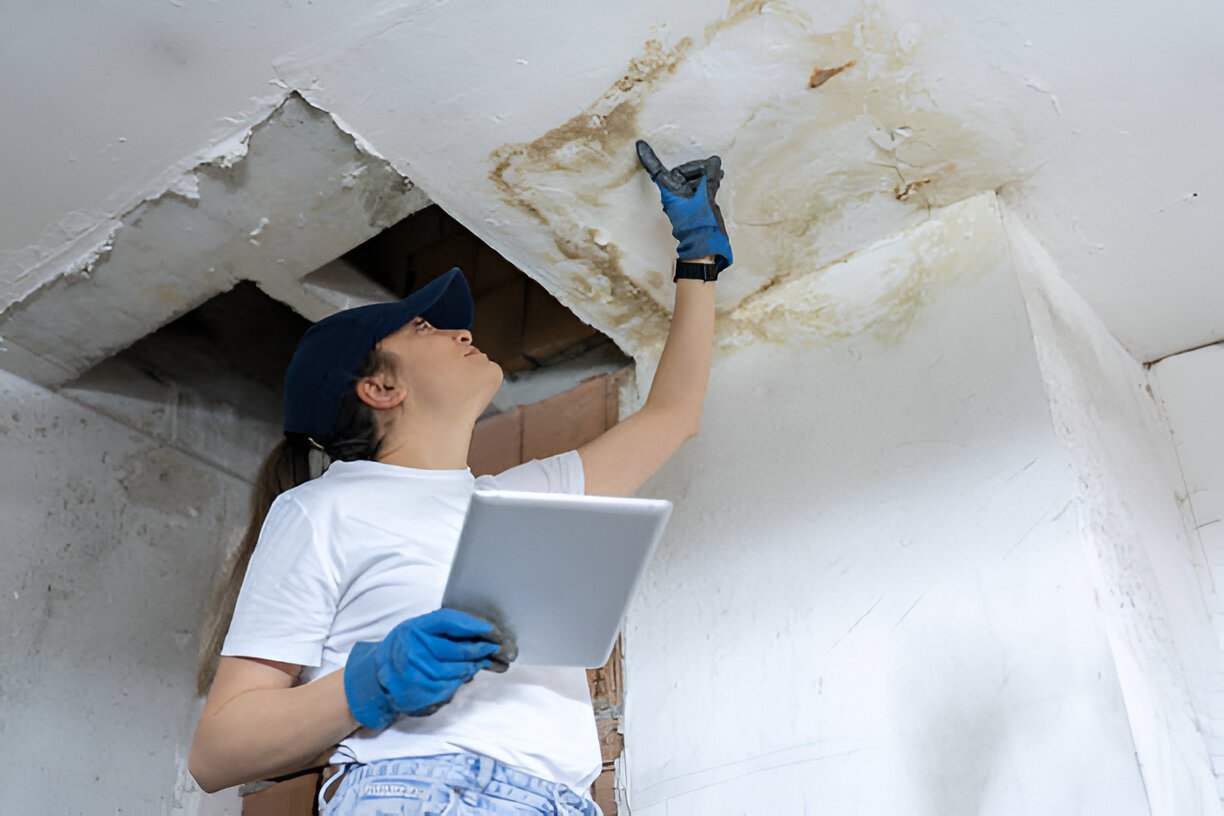
Shoot these in sequence:
- Wide shots of each affected room
- The water source, if visible
- Close-ups of stains, warped boards, and swollen cabinets
- A tape measure against the water line for scale
- Serial numbers on damaged appliances
- A video walkthrough narrating room by room
Date-stamp everything. Georgia humidity means mold can start within a day or two in a wet crawl space or wall cavity, so early photos also help show how quickly damage progressed.
Water Damage Claim Inventory Examples for Your Itemized List
A water damage claim inventory is a room-by-room list of every damaged item, with quantity, age, condition, and value.
Work one room at a time and do not skip the boring stuff. The lists that get paid without a fight share the same traits: every line has a source, every value has a basis, and nothing appears that the photos do not back up.
| Room | Item | Quantity | Age | Condition Before Loss | Original Cost | ACV | Replacement Cost | Proof Attached |
|---|---|---|---|---|---|---|---|---|
| Kitchen | Upright freezer | 1 | 6 yrs | Good | $700 | $280 | $850 | Receipt, photo |
| Living room | Area rug | 1 | 3 yrs | Good | $400 | $200 | $450 | Card statement |
| Bedroom | Mattress, queen | 1 | 8 yrs | Fair | $900 | $180 | $1,100 | Receipt |
| Garage | Cordless drill kit | 1 | 4 yrs | Good | $180 | $70 | $200 | Photo of serial plate |
How to build the list room by room
Start at the doorway of each affected room and work clockwise. For every item, record:
- What it is, specifically, “19-inch flat-screen monitor,” not “electronics”
- How many, quantity matters on things like towels, dishes, and shelving contents
- Approximate age, from memory or a receipt
- Condition before the loss, good, fair, worn; this drives depreciation
Handling high-value and hard-to-value items
Art, jewelry, firearms, musical instruments, collectibles, and high-end electronics are where most inventories fall apart. A receipt rarely exists, and a replacement price pulled from memory invites a challenge.
For these items, attach a written appraisal from a qualified appraiser when you have one, and note the appraiser’s name and date on the line.
Check your policy’s special limits before you assign values.
Replacement cost vs. actual cash value
Replacement cost is what it costs to buy the item new today. Actual cash value is replacement cost minus depreciation. Most policies pay one or the other, and the difference can be substantial on older belongings, a six-year-old freezer might carry a replacement cost of $850 and an actual cash value of $280.
Check your coverage before you assign values. If your policy pays actual cash value, list both numbers so the adjuster sees your math.
Digital inventory tools that actually help
Apps that let you photograph an item, log the serial number, and export a PDF save hours and produce a cleaner itemized list than handwritten notes.
If the water came in fast, photograph first and inventory second. In a metro Atlanta crawl space or wall cavity, Georgia humidity can push mold growth within a day or two, and items you intend to claim may be unsalvageable before you finish typing.
Deadlines, Notarization, and the Sworn Statement
The sworn statement is the part most people rush, and it is the part that carries legal weight. Signing it under oath means every figure must be accurate. Notarization is typically required, so plan for a notary visit.
Deadlines vary by policy, but common windows are:
- Notice of loss: often within days of discovery
- Proof of loss submission: commonly 60 days, per your policy language
- Additional documentation: as requested, with a stated response date
Miss a deadline and the carrier can deny the claim on that basis alone, regardless of merit. If you are unsure where you stand, our property damage claim timeline guide walks through each stage so you can plan around the dates.
Common Mistakes That Get a Proof of Loss Denied or Contested
The most common mistake is submitting a proof of loss before the damage is fully documented. Once you sign, you have committed to a number. If a contractor later finds wet insulation behind a wall, you may have to amend the form, and amendments draw scrutiny.
Other frequent errors:
- Rounding values instead of using receipts
- Listing items you cannot prove ownership of
- Skipping the video walkthrough
- Guessing at the cause of loss instead of stating what you observed
Watch out: signing a proof of loss with blank fields or “to be determined” values gives the carrier grounds to dispute the entire submission later.
What a denial or a contest actually looks like
A denial is not always a single letter saying no. More often the carrier responds with a reservation-of-rights letter, a request for additional documentation, or a partial payment with a cover note explaining what was trimmed and why.
- Late submission, the proof of loss arrived outside the policy window
- Insufficient proof of ownership for listed items
- Cause of loss not covered, for example, long-term seepage or repeated leakage excluded under the policy
- Damage pre-dated the loss, based on the adjuster’s photos or moisture readings
Read the letter closely and separate the reason from the tone. A request for more information is not a denial, and treating it like one can slow the file down.
What to do when your proof of loss is rejected
- Get the reason in writing. Ask the adjuster to identify the specific policy language and the specific line items in dispute. A phone explanation is not a record.
- Correct and resubmit, do not argue and resubmit. If the issue is proof of ownership, attach the missing receipts and a corrected inventory. If the issue is valuation, attach comparable pricing or an appraisal.
- Request the carrier’s own documentation. You are entitled to the adjuster’s report, the photos relied on, and the estimate used to calculate payment. Compare their scope against yours line by line.
- Use the appraisal clause if your policy has one. Many policies include a dispute process where each side names an appraiser and a neutral umpire resolves differences in value. It is often faster and cheaper than litigation.
- Escalate inside the carrier first. A written complaint to the claims supervisor, referencing your claim number and the specific unresolved items, frequently moves a stalled file.
- Know the state regulator’s role. The Georgia Office of Commissioner of Insurance and Safety Fire accepts consumer complaints about claims handling. Filing a complaint is a formal step, so use it after the carrier has had a clear written chance to respond.
- Watch the clock. Georgia’s statute of limitations for written contracts limits how long you have to pursue a claim if negotiations stall, so calendar the deadline the day you file the original proof of loss.
If your claim is contested, a public adjuster can review the file, but that decision is easier with clear guidance. Our breakdown of public adjuster vs insurance adjuster explains where each one fits.
For a deeper list of payout-protecting tactics, read 7 ways to maximize your water damage insurance payout.
Get a Free Damage Assessment Before You File
Filing blind is the biggest risk in the whole process.
Our IICRC-certified technicians respond 24/7 across metro Atlanta, and we are on site within one hour. We bill insurance directly and offer contents pack-out when items need to leave the home.
For a free assessment before you file, visit our water damage and mold restoration in Decatur, GA page or call 678-379-8000.
Frequently Asked Questions
What should I avoid saying to an insurance adjuster about water damage?
Do not guess at the cause of loss or speculate about how long the water has been there. Avoid saying the damage is minor or that you will handle cleanup yourself, because that can lower your claim. Do not sign anything on the spot or give a recorded statement before you have your documentation together. Stick to facts you can support with photos, receipts, and the date of loss, and keep a written log of every conversation with the adjuster.
What counts as proof of loss for a water damage claim?
A complete water damage proof of loss includes the signed and notarized form, an itemized list of damaged property with values, photographic evidence, repair estimates, receipts or other proof of ownership, and your policy number and date of loss. Supporting documents like a mitigation invoice or a video walkthrough strengthen the file. Submit everything by your policy’s claim filing deadline so the adjuster can process the claim without delay.
How do I document damaged belongings for an insurance claim?
Build an inventory log room by room. For each item, record the description, brand, model, purchase date, original cost, and replacement cost, and attach a photo or receipt where you have one. Note whether you are claiming replacement cost or actual cash value. For high-value items like art, jewelry, or electronics, include appraisals or serial numbers. A digital inventory tool or a simple spreadsheet keeps the list organized and easy to send to your adjuster.
What happens if my proof of loss is denied or contested?
A denial is not the end of the claim. Review the adjuster’s written reason, then correct missing documents, add clearer photos, or get a second repair estimate that matches the scope of work. You can request a re-inspection and submit a supplemental proof of loss. Keep every receipt and invoice. If the dispute continues, ask about your policy’s appraisal clause or contact the Georgia Office of Commissioner of Insurance for guidance on next steps.
Water damage claims reward preparation and punish guesswork. If your home in metro Atlanta is wet right now, call Aquaflame Restores It at 678-379-8000 for a free assessment. We document the damage, help you build the proof of loss file, and bill your insurer directly so you can focus on getting back home.
