Last Updated: November 5, 2026
Quick Summary
To dry carpet without a wet vac, blot up standing water with thick towels, then lift the carpet to dry or remove soaked padding and air out the subfloor. Run fans angled across the carpet plus a dehumidifier, and check moisture readings every few hours.
- Press thick towels into the carpet and stand on them, swapping towels as soon as they feel heavy.
- Pull the carpet back at a corner and remove soaked padding, discarding it if it is falling apart.
- Point fans at a slight angle across the carpet, not straight down, and run a dehumidifier in the same room.
- Check the carpet and subfloor every few hours with a moisture meter and watch for musty smells.
- Carpet wet for 3 days makes mold growth likely, so call a professional if it still feels damp or smells off.
Table of Contents
- What You’ll Need to Dry Carpet Without a Wet Vac
- Step-by-Step: How to Dry Carpet Without a Wet Vac
- Material-Specific Drying Techniques for Carpet and Padding
- Is Your Carpet Wet for 3 Days? Here’s What to Do
- Signs of Mold Under Carpet and How to Address Them
- The Water Damage Restoration Timeline: When to Call a Professional
- Get a Free Assessment from Aquaflame Restores It
- Frequently Asked Questions
What You’ll Need to Dry Carpet Without a Wet Vac
You can dry carpet without a wet vac, and the tools cost less than most people expect. The trick is speed: mold can start setting up within a day or two in a humid Georgia home, so the first few hours matter more than any single piece of equipment.
Here is what to gather before you start:
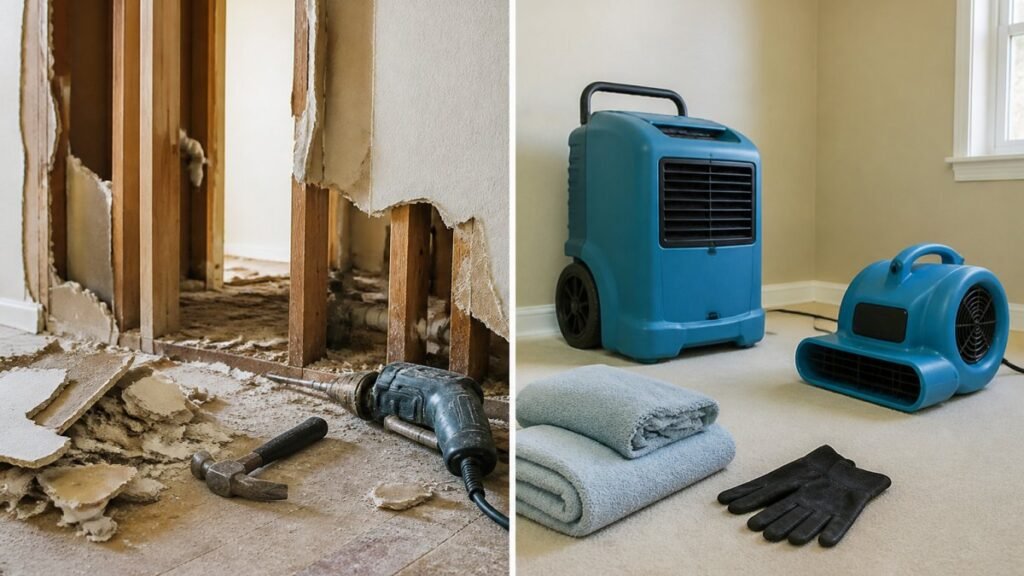
- Thick absorbent towels or old bath sheets
- A wet/dry shop vac if you have one, or a mop and bucket
- Two or three box fans or industrial air movers
- A dehumidifier, ideally one rated for the room size
- A moisture meter, or a cheap pin-type tester
- Rubber gloves, knee pads, and closed-toe shoes
- Baking soda for odor control
- A pry bar or stiff putty knife to lift carpet edges
The water often gets mopped up while the padding stays soaked underneath. That hidden moisture is what turns a small leak into a mold problem. Below, we’ll show you exactly how to dry carpet without a wet vac, step by step, and when to stop and call for help.
Step-by-Step: How to Dry Carpet Without a Wet Vac
Work fast and work in order. Each step below builds on the last, and skipping one leaves moisture trapped where you cannot see it.
Step 1: Remove Standing Water and Blot Excess Moisture
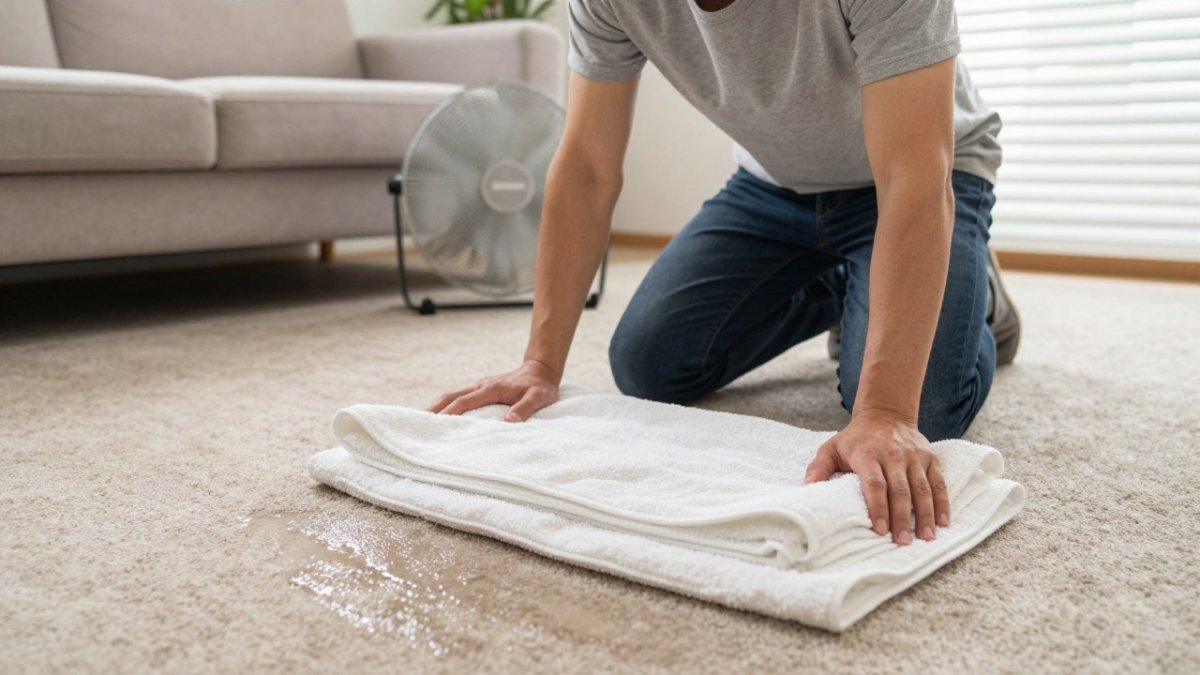
Start by getting the visible water out. Push standing water toward a drain or scoop it with a mop and bucket. Then press thick towels into the carpet and stand on them to force water up through the fibers.
Swap towels as soon as they feel heavy. Repeat until the carpet stops releasing water. This mechanical extraction step removes the bulk of the moisture before fans ever switch on. For a deeper look at extraction methods and when DIY stops being enough, see our guide to water removal.
Step 2: Lift the Carpet to Dry the Padding and Subfloor
Carpet padding acts like a sponge. If it stays wet, the carpet above it will never dry, no matter how many fans you run.
Pull the carpet back at a corner using pliers or a pry bar. Peel it back gently so you do not tear the backing. Remove soaked padding and set it outside to dry, or discard it if it is falling apart.
Now check the subfloor. In older metro Atlanta homes, that is often plywood over a crawl space, and plywood soaks up water fast. Wipe it down and let air reach it.
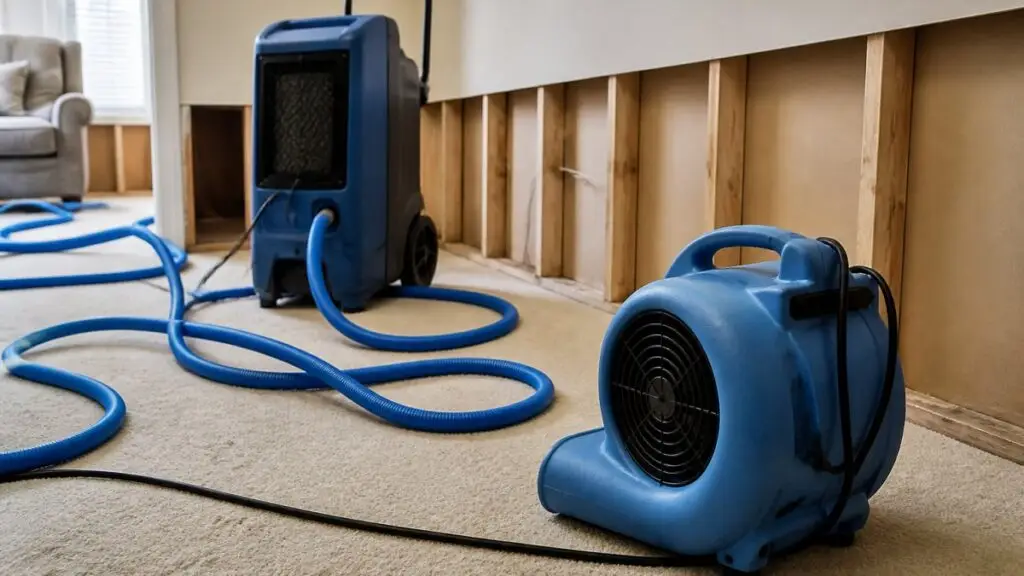
Step 3: Set Up Fans and Dehumidifiers for Air Circulation
Air movement alone will not dry a room. You need to move air and pull moisture out of it at the same time.
- Point fans at a slight angle across the carpet, not straight down
- Open interior doors and closets to keep air moving
- Run the dehumidifier in the same room and empty it often
- Crack a window only if outdoor humidity is low
Georgia summer air is often more humid than the room you are trying to dry. Running a dehumidifier with the windows shut usually beats opening everything up. Our team’s breakdown of structural drying and dehumidification explains how professionals combine air movers and dehumidifiers to pull moisture out of walls and framing, not just the carpet surface.
Step 4: Monitor Moisture Levels and Prevent Mold Growth
Check the carpet and subfloor every few hours with a moisture meter. Readings should fall steadily. If they stall or climb, airflow is not reaching that spot.
Watch for these warning signs:
- A musty smell that gets stronger
- Dark patches on the carpet backing
- Curling or rippling carpet edges
- Condensation on windows or cool surfaces
Mildew prevention comes down to three things: fast drying, low indoor humidity, and constant airflow. If the carpet is still damp after a full day of fans and dehumidification, the moisture is coming from somewhere you have not found yet.
Here is the drying sequence the article walks through, in order.
| Step | What to do | Key detail |
|---|---|---|
| Step 1 | Remove standing water and blot excess moisture | Swap towels as soon as they feel heavy |
| Step 2 | Lift the carpet to dry padding and subfloor | Remove soaked padding or discard if falling apart |
| Step 3 | Set up fans and dehumidifiers for air circulation | Point fans at a slight angle across carpet |
| Step 4 | Monitor moisture levels and prevent mold growth | Check carpet and subfloor every few hours with a moisture meter |
Material-Specific Drying Techniques for Carpet and Padding
Not all carpet dries the same way. Wool holds moisture longer than synthetic nylon or polyester and needs gentler airflow to avoid stretching. Cut-pile carpet dries faster than looped Berber, where water hides in the loops.
Padding is the bigger problem. Foam padding traps water and can crumble if left wet. Waffle-style padding dries faster but still needs to come out from under the carpet.
A simple rule: if you can wring water out of the padding, it needs to be removed and dried separately, or replaced. Do not lay wet padding back under dry carpet.
Is Your Carpet Wet for 3 Days? Here’s What to Do
Carpet wet for 3 days is a different situation than carpet wet for 3 hours. After 72 hours, mold growth becomes likely, especially in humid rooms like basements and bathrooms.
Here is what to do:
- Stop using the room and keep foot traffic off the carpet
- Smell the air near the baseboards for a musty odor
- Pull back a corner and check the backing and padding by hand
- Run dehumidifiers continuously and track moisture readings
- Call a professional if the carpet still feels damp or smells off
For realistic drying timelines and what speeds the process up, read our guide on how long to dry out a house after a flood. If you are in Cobb or Henry County and the carpet has been wet for days, a free assessment will tell you whether drying is still possible or whether the materials need to come out.
Signs of Mold Under Carpet and How to Address Them
Mold under carpet shows up in a few predictable ways. The most common sign is a musty smell that lingers even after the room feels dry. You may also see dark green or black speckling on the carpet backing, discolored padding, or a chalky white film near the tack strips.
Small surface spots on a synthetic carpet can sometimes be cleaned and fully dried, but larger or hidden growth needs a professional. Anything larger than about 10 square feet, any mold you cannot see, or any mold following sewage or outdoor flooding needs professional mold remediation. Disturbing it yourself spreads spores through the house.
Our guide on how to identify mold in a house walks through the seven warning signs to check before the problem spreads.
The Water Damage Restoration Timeline: When to Call a Professional
A typical water damage restoration timeline moves in phases: emergency extraction in the first hours, structural drying over the next few days, then cleaning, sanitization, and odor neutralization before the space is closed back up.
Call a professional when:
- Water came from a sewage backup or outdoor flooding
- The carpet has been wet for more than 48 hours
- The subfloor or wall framing feels soft
- You see or smell mold
- The affected area is larger than a single room
Aquaflame Restores It responds 24/7 across metro Atlanta, with IICRC-certified technicians on site within one hour. We work directly with insurance companies and bill them directly.
Get a Free Assessment from Aquaflame Restores It
Wet carpet is a race against the clock, and the first day matters. If your carpet has been wet for more than a day, or you are seeing any of the signs above, stop guessing and get a real moisture reading.
Aquaflame Restores It is locally owned in Decatur, Georgia, and serves metro Atlanta including DeKalb, Clayton, Cobb, and Henry counties. Our IICRC-certified technicians offer free damage assessments, direct insurance billing, and 24/7 emergency response.
Call 678-379-8000 for a free assessment and get your home drying today.
Frequently Asked Questions
How long can carpet stay wet before mold starts to grow?
Mold can begin to grow on wet carpet and padding within 24 to 48 hours, especially in humid conditions like those in metro Atlanta. If your carpet has been wet for 3 days or longer, mold growth is likely. Look for musty odors, discoloration, or visible fuzz. For any moldy area larger than about 10 square feet, or if the mold is hidden under the carpet, call a professional restoration company like Aquaflame Restores It for a free assessment.
Is it safe to use a household fan to dry wet carpet?
Yes, a household fan can help dry carpet, but it is not enough on its own. You need strong air circulation and dehumidification to pull moisture out of the carpet and padding. Use multiple fans and a dehumidifier if possible. Keep the area well ventilated by opening windows if the outside air is dry. Avoid using fans if the water is contaminated (Category 3), as this can spread bacteria. If the carpet is wet for 3 days or more, professional drying is recommended.
When should I call a professional for water-damaged carpet?
Call a professional if the water has been sitting for more than 24 hours, if you see signs of mold under carpet, or if the affected area is larger than about 10 square feet. A water damage restoration timeline shows that professional drying equipment can save carpet that DIY methods cannot. Aquaflame Restores It offers free assessments and works directly with your insurance company. Call 678-379-8000 for 24/7 emergency response across metro Atlanta.
Does Georgia humidity affect how fast carpet dries?
Yes, Georgia’s high humidity slows evaporation and can make it much harder to dry carpet without a wet vac. In summer, the air already holds a lot of moisture, so fans alone may not be enough. You need a dehumidifier to pull moisture from the air. If the carpet is wet for 3 days in humid conditions, mold risk increases significantly. Professional restoration companies use industrial dehumidifiers and moisture meters to ensure carpet and subfloor are completely dry.
When water sits in carpet and padding, the clock works against you. Our team is on site within one hour, day or night, with the moisture meters, air movers, and dehumidifiers to dry your space properly and document everything your insurer needs. Get started with Aquaflame Restores It and protect your floors before mold takes hold.