Table of Contents
- 1. Document All Water Damage Thoroughly Before Mitigation Begins
- 2. Understand Your Policy Coverage and Exclusions
- 3. What Not to Say to Your Insurance Adjuster
- 4. File Your Claim Promptly and Completely
- 5. Hire Professional Restoration Services Early
- 6. Obtain Contractor Estimates and Challenge Low Offers
- 7. How to Appeal a Denied Water Damage Insurance Claim
- Frequently Asked Questions
Last Updated: September 1, 2026
7 Ways to Maximize Your Water Damage Insurance Payout
Water damage strikes without warning, and the financial stakes are high. A burst pipe, flooding, or failed appliance can cost tens of thousands to repair. The difference between a minimal settlement and full recovery often comes down to how you handle the first 48 hours and what happens next.
This guide covers seven concrete strategies to maximize your payout, from protecting your claim before it starts to challenging low offers and appealing denials.
1. Document All Water Damage Thoroughly Before Mitigation Begins
Your insurance adjuster can only pay for damage they can see and verify. The moment you discover water damage, photograph and video everything, walls, flooring, furniture, belongings, before you move anything or begin cleanup. This is where most homeowners lose money. They start mitigation immediately to prevent mold, which is right, but skip the documentation step that proves what was damaged.
Photographic Evidence and Video Walkthroughs
Take photos from multiple angles in natural lighting. Capture close-ups of stains, warping, and structural damage alongside wide shots showing the full scope of affected areas. Video walkthroughs provide context that still photos can’t. Walk through each room slowly, narrating what you see. Include timestamps and date stamps on all files.
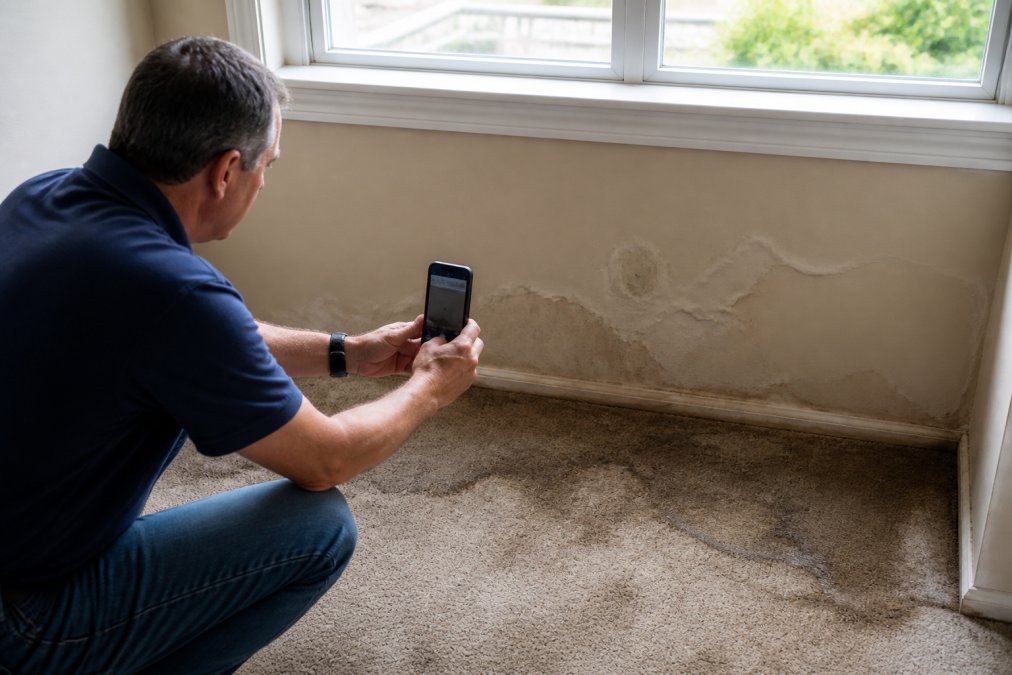
Store originals in cloud storage immediately. Upload to Google Drive, Dropbox, or iCloud the same day. If your phone is damaged or lost, your documentation goes with it.
Creating a Water Damage Insurance Claim Documentation Checklist
Document each item with:
- Location in the home (room, wall, floor, etc.)
- Description of damage (staining, warping, mold growth, structural compromise)
- Pre-damage condition if applicable (age, material, condition before water intrusion)
- Estimated replacement cost or actual purchase price if you have receipts
- Photographic evidence (file name and date)
Use the NAIC Home Inventory App, a free tool developed by the National Association of Insurance Commissioners. It lets you organize photos by room, add descriptions, and export a detailed report your adjuster can reference.
Photograph receipts and warranties for high-value items before damage occurs. If water destroys your records, you’ll have digital backups proving ownership and purchase price, critical for proving loss.
2. Understand Your Policy Coverage and Exclusions
Not all water damage is covered equally. Your policy’s language determines what gets paid and what doesn’t. Understanding the difference between actual cash value and replacement cost value, plus knowing your coverage limits and deductibles, is essential before your adjuster arrives.
Actual Cash Value vs. Replacement Cost Value
Actual cash value (ACV) is what your damaged items are worth today, accounting for depreciation. A five-year-old refrigerator that cost $1,500 new might be worth only $600 in actual cash value.
Replacement cost value (RCV) is what it costs to replace that same refrigerator with a new one of similar quality, likely around $1,500. If your policy includes RCV coverage, you get the full replacement cost. If it only covers ACV, you absorb the depreciation loss.
Check your policy documents now. If you only have ACV, knowing this before filing helps you understand what settlement to expect.
Identifying Coverage Limits and Deductibles
Your policy has a per-occurrence limit (the maximum the insurer will pay for one event) and often separate limits for specific categories. Water damage claims frequently hit these limits. A flooded basement with structural damage, ruined flooring, and damaged personal property can easily exceed $50,000.
Your deductible is what you pay before insurance pays anything. A $1,000 deductible means you cover the first $1,000 of damage; insurance covers the rest up to your limit. Some policies have higher deductibles for water damage specifically, sometimes $2,500 or more. Know this number before you file.
Sump pump failure, gradual leaks, and water intrusion from outside typically fall under “water damage exclusions” in standard homeowners policies. Flood damage from external sources requires separate flood insurance. If your water damage resulted from these causes, your standard policy may not cover it. Ask explicitly.
3. What Not to Say to Your Insurance Adjuster
Your insurance adjuster works for the insurance company, not for you. Their job is to accurately assess damage and control costs. Every word you say can be used to reduce your payout. Homeowners often make statements that seem innocent but undermine their claims.
Common Statements That Reduce Payouts
Don’t say your home had pre-existing water issues or previous leaks. Even mentioning “this has happened before” signals that the damage might be excluded as a pre-existing condition or gradual deterioration rather than sudden loss.
Don’t minimize the damage. Saying “it’s not that bad” or “we caught it early” might feel reasonable, but adjusters interpret this as evidence that the loss is smaller than your documentation shows.
Don’t discuss repairs you’ve already started or mitigation you’ve begun without professional documentation. If you’ve already replaced drywall or cleaned affected areas, the adjuster can’t verify the original damage.
Don’t admit to maintenance lapses. Comments like “we hadn’t cleaned the gutters in a while” give the adjuster ammunition to deny claims as resulting from negligence rather than a covered peril.
How to Communicate Effectively With Adjusters
Stick to facts. “Water entered the home from [specific source] on [date], affecting [specific areas]. Here is my documentation.” Don’t speculate about causes.
Provide your documentation proactively. Hand the adjuster a USB drive or cloud link with organized, timestamped images and your inventory checklist. This shows preparedness and prevents the adjuster from claiming they couldn’t verify damage.
Request everything in writing. After your adjuster visit, send a follow-up email summarizing what was discussed and what damage was observed. This creates a record and prevents misunderstandings.
4. File Your Claim Promptly and Completely
Timing matters. Most policies require claims to be filed within 30 to 90 days from the loss (naic.org). Filing late can result in denial. But rushing to file without complete documentation is equally risky. You need the right balance: file quickly, but include everything.
Meeting Claim Filing Deadlines and Requirements
Contact your insurer within 48 hours of discovering damage. You don’t need a complete claim yet, just notification that a loss occurred. This starts the clock on your coverage and opens a claim file.
Review your policy for specific filing requirements. Some insurers require a formal proof of loss document within a set number of days. Missing this deadline can result in automatic denial, regardless of whether the damage is covered.
Submitting Proof of Loss With Itemized Inventory
Your proof of loss should include:
- Date and cause of loss
- Description of all damaged property, organized by room or category
- Estimated cost to repair or replace each item
- Photos and documentation supporting each claim
- Your deductible acknowledgment
- Statement that the information is true and complete
Attach your itemized inventory. Include receipts, warranties, and proof of ownership for high-value items. If you don’t have original receipts, include comparable product listings showing current replacement costs.
The difference between a $10,000 settlement and a $25,000 settlement often comes down to the completeness of the proof of loss. Detailed, organized documentation signals that you’re serious and prepared.
5. Hire Professional Restoration Services Early
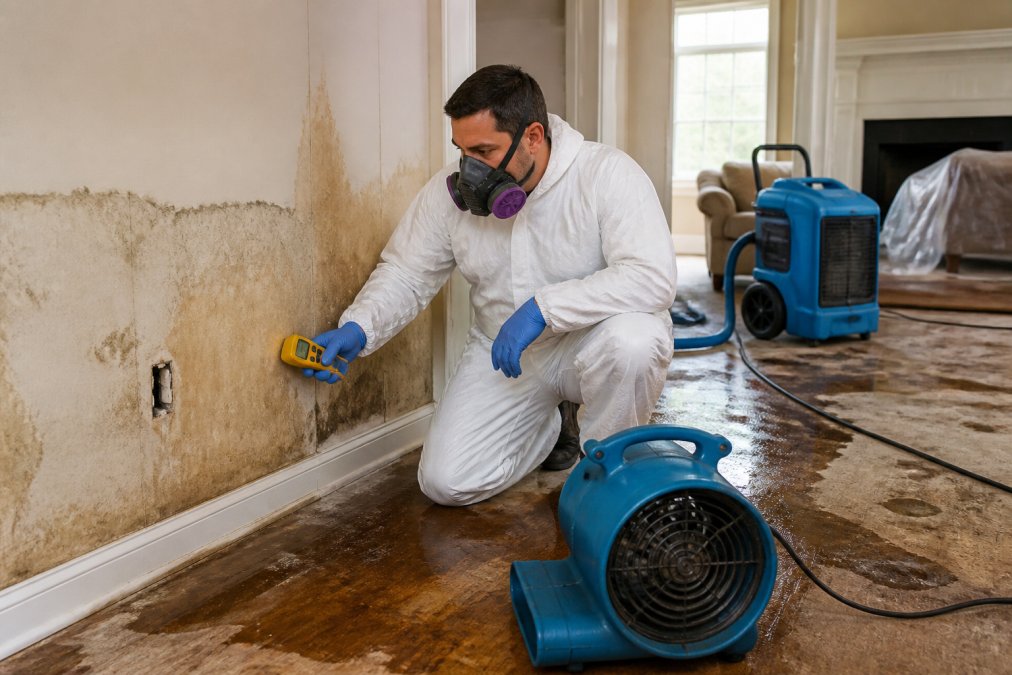
Professional mitigation protects your insurance claim. When you hire a restoration company immediately, they document the damage professionally, implement emergency measures to prevent further loss, and create a detailed scope of work that becomes part of your claim file. This creates an independent third-party record of the damage.
Why Professional Mitigation Protects Your Claim
Insurance companies understand that unmitigated water damage escalates quickly. Mold growth, structural deterioration, and secondary damage can turn a $15,000 loss into a $50,000 loss within days. Your policy requires you to mitigate, to take reasonable steps to prevent further damage. Hiring professionals demonstrates you’re meeting this obligation.
Professional restoration companies, especially IICRC-trained technicians, use standardized documentation practices (iicrc.org). They photograph conditions, record moisture readings, and create detailed reports that align with insurance industry standards. When your adjuster reviews a professional scope of work, they’re more likely to approve it because it’s written in the language adjusters understand.
Direct Insurance Billing Advantages
Many restoration companies, including Aquaflame Restores It, offer direct insurance billing. The restoration company bills your insurance company directly rather than billing you. You avoid paying out of pocket and waiting for reimbursement. More importantly, direct billing creates a formal claim process that your insurer takes seriously.
Direct billing also protects you if your claim is initially underpaid. The restoration company has a financial interest in ensuring the scope of work is complete and accurate, so they’ll work with your adjuster to justify costs and push back on unreasonable denials.
6. Obtain Contractor Estimates and Challenge Low Offers
After your adjuster submits their estimate, you have the right to challenge it. If the estimate seems low, get competing estimates from licensed contractors. This gives you leverage in negotiations and often results in higher settlements.
Getting Multiple Estimates for Repair Costs
Contact at least two independent contractors to assess the damage and provide written estimates. Make sure they’re licensed, insured, and experienced with water damage restoration. Ask them to itemize costs by category: water extraction, structural drying, drywall replacement, flooring replacement, etc.
Compare the estimates. If they vary significantly, ask each contractor why. Sometimes the difference reflects different scopes of work; sometimes it reflects market rates in your area.
Negotiating Settlement Offers With Evidence
If your adjuster’s estimate is lower than your contractor estimates, request a detailed explanation. Ask which items were excluded and why. Many adjusters use software that generates estimates, and these often undervalue labor or overlook certain damage categories.
Submit your contractor estimates to your adjuster in writing. Include a cover letter explaining the discrepancies: “The adjuster’s estimate for drywall replacement is $3,000, but licensed contractors in our area estimate $5,500 for the same work. Here are three written estimates supporting this figure.”
This approach works because it’s data-driven and professional. Many adjusters will increase their offer rather than dispute it.
If your adjuster refuses to increase the offer despite clear evidence, ask about the appraisal process. Most policies include an appraisal clause that allows you to hire an independent appraiser to resolve valuation disputes. The cost is split between you and the insurer. This threat alone often prompts adjusters to reconsider their position.
7. How to Appeal a Denied Water Damage Insurance Claim
If your claim is denied, don’t accept it automatically. Many denials are based on misinterpretations of policy language or adjuster errors. You have the right to appeal, and appeals often succeed.
Understanding Denial Reasons and Policy Language
Request a detailed written explanation of the denial. The insurer must explain which policy provision they’re relying on and why they believe your claim doesn’t qualify. Common denial reasons include:
- Exclusion interpretation: The insurer claims your damage falls under an exclusion (e.g., “water damage from external sources” or “gradual leaks”).
- Cause of loss: The insurer argues the water intrusion wasn’t from a covered peril.
- Policy limit: The damage exceeds your coverage limit.
- Deductible: The damage is less than your deductible.
Read the policy language carefully. If the denial letter cites a specific policy section, pull that section and read it in full context. Denials often rely on narrow interpretations that don’t hold up under closer scrutiny.
When to Hire a Public Adjuster or Attorney
A public adjuster is an independent insurance professional who works exclusively for you. They evaluate your claim, negotiate with your insurer, and advocate for a higher settlement. They’re paid on contingency, typically 5-15% of any additional settlement they secure above the insurer’s initial offer.
Hire a public adjuster if your claim was denied and you believe the denial is incorrect, your adjuster’s estimate seems significantly lower than contractor estimates, or the damage is complex.
If your appeal involves legal questions, such as whether the insurer violated state insurance regulations, consult an attorney. Many offer free consultations. If the claim value is substantial ($50,000+) and the denial seems unjustified, legal representation can be worthwhile.
Maximizing your water damage insurance payout requires preparation, documentation, and persistence. Start by understanding your coverage and documenting damage thoroughly. Communicate strategically with your adjuster, hire professional restoration services that protect your claim, and challenge low offers with evidence. If your claim is denied, appeal it, many denials don’t hold up under scrutiny.
When water damage strikes your home, Aquaflame Restores It provides the professional mitigation and direct insurance billing that protects your claim from day one. Our IICRC-trained technicians respond within 30 minutes, document damage using industry-standard practices, and handle communication with your insurance company, so you can focus on recovery. Call 24/7 for emergency water damage restoration and comprehensive claim support.
Frequently Asked Questions
How do I document water damage for an insurance claim?
Document immediately with photos and video of all affected areas, including water source, damaged materials, and belongings. Create a detailed inventory listing each item, its original purchase price, and current condition. Save receipts, warranties, and proof of ownership. Use the NAIC Home Inventory App or similar tools to organize records by room. Timestamp all documentation and maintain copies in multiple locations. This proof of loss becomes critical when the insurance adjuster evaluates your claim.
What should I never say to an insurance adjuster about water damage?
Avoid admitting fault, exaggerating damages, or mentioning prior water damage not covered by your policy. Don’t say the damage is worse than it actually is, as this triggers fraud investigations. Never discuss settlement expectations before the adjuster completes their assessment. Avoid vague language like ‘the water just appeared’, instead, explain the specific peril (burst pipe, roof leak, plumbing failure). Stick to facts and let your documentation speak for itself. Always be honest; misrepresentations can result in claim denial.
What’s the difference between actual cash value and replacement cost value?
Actual cash value (ACV) accounts for depreciation, meaning you receive less than the original purchase price. Replacement cost value (RCV) covers the full cost to replace damaged items at current prices without depreciation deduction. RCV typically results in higher payouts but may require higher premiums. Check your policy to see which your coverage includes. If your policy offers RCV, ensure your claim specifically requests it. Understanding this distinction can significantly impact your final settlement amount.
How can I appeal a denied water damage insurance claim?
First, obtain a written explanation of the denial reason from your insurer. Review your policy to confirm whether the denial is justified based on coverage language and exclusions. Gather additional documentation, expert assessments, or contractor estimates that support your claim. File a formal appeal with your insurance company, including new evidence. If the appeal is denied, contact your state’s insurance commissioner or consider hiring a public adjuster (typically 5-15% of settlement) or attorney. Document all communication throughout the process.
Why would a water damage claim be denied?
Common denial reasons include policy exclusions (flood, gradual leaks, lack of maintenance), failure to mitigate further damage, missed filing deadlines, or insufficient proof of loss. Some policies exclude damage from plumbing failures or lack of proper home maintenance. Failure to shut off water at the source or delay in reporting can also result in denial. Pre-existing conditions not disclosed to the insurer may trigger denial. Review your specific denial letter carefully, it must cite the exact policy language or exclusion that applies to your claim.
This article was written using GrandRanker