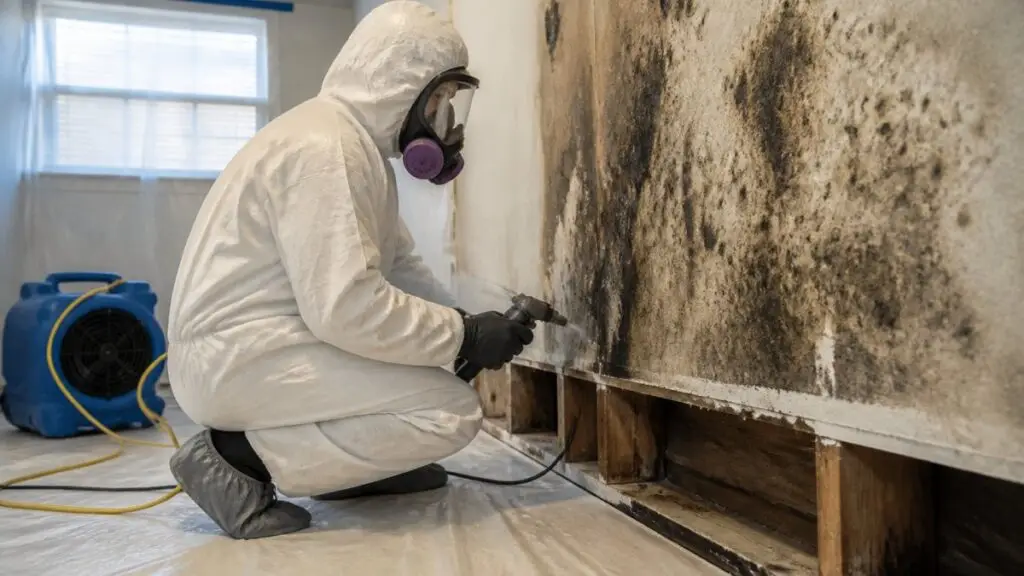
Last Updated: October 29, 2026
Quick Summary
Insurance often covers mold remediation costs, but usually only when the mold results from a covered event such as a sudden pipe burst, and only within the limits of your homeowners policy. Mold from long-term leaks or neglected maintenance is frequently excluded. Check your policy’s mold sublimit and endorsements before filing a claim.
- Coverage usually depends on whether the water event was sudden and accidental or gradual.
- Many standard policies cap mold payments with a sublimit, even when the water damage is covered.
- Look for fungi endorsements and exclusions on your declarations page and endorsement schedule.
- Report leaks promptly and document the source with photos, receipts, and a plumber’s report.
- Ask your agent in writing whether mold is excluded, sublimited, or included in your policy.
Table of Contents
- Does Insurance Cover Mold Remediation Costs? The Short Answer
- When Homeowners Insurance Covers Mold: Sudden Versus Gradual Damage
- Mold Endorsements, Coverage Limits, and Policy Exclusions
- How to Document Mold Damage for Your Insurance Claim
- How the Claims Adjustment Process Works for Mold
- How Long Mold Remediation Takes and What to Expect
- Next Step: Get a Free Mold Damage Assessment in Metro Atlanta
- Frequently Asked Questions
Does insurance cover mold remediation costs? Often, yes, but only when the mold is a result of a covered event, such as a sudden pipe burst, and only within the limits of your homeowners policy. Read the full guide on whether homeowners insurance covers mold removal for what causes denials and how to file. Aquaflame Restores It, a locally owned restoration company in Decatur, Georgia, hears this question often from homeowners across DeKalb, Clayton, Cobb, and Henry counties.
Does Insurance Cover Mold Remediation Costs? The Short Answer
Most standard homeowners policies cover mold remediation only when it follows a covered peril, such as a sudden and accidental pipe leak. Mold that develops from long-term seepage, poor ventilation, or neglected maintenance is frequently excluded. Reading your policy’s language on water and mold before a loss occurs is worth the effort.
When Homeowners Insurance Covers Mold: Sudden Versus Gradual Damage
The single most important distinction insurers draw is between sudden and gradual water damage. See which mold damage is covered versus excluded for a closer look at each case. Sudden, accidental events such as a burst supply line or a failed water heater are generally treated as covered events, and the mold that grows from that water is often included in the claim.
Sudden Pipe Leaks and Mold Coverage
A pipe that bursts in a crawl space or wall cavity is the classic example of a covered loss. In metro Atlanta, where winter cold snaps can freeze exposed plumbing, a single event can saturate drywall and subflooring within hours. Acting quickly matters, because mold growth can begin soon after water exposure. If the leak was discovered and reported promptly, the chances of coverage for the resulting mold are generally stronger.
Why Maintenance Neglect Leads to Claim Denials
Insurers commonly deny claims when they determine that homeowners knew about a leak and did not fix it. A dripping shower valve left alone for months, or a damp attic ignored after summer storms, can produce extensive mold that the insurer will classify as preventable. Keeping records of repairs and promptly addressing any moisture you notice are the best ways to protect your claim.
Mold Endorsements, Coverage Limits, and Policy Exclusions
Coverage limits are where most mold claims are actually decided, and they are also where policy language gets the least clear. A standard homeowners policy typically treats mold in one of three ways: it excludes mold outright, it covers mold only as a consequence of a covered water loss, or it covers mold up to a stated sublimit.
What a Mold Sublimit Actually Means
A mold sublimit is a cap on what the insurer will pay for mold-related cleanup, testing, and removal, separate from the overall dwelling coverage. Many standard policies set that cap in the low thousands of dollars, and it applies even when the underlying water damage is covered in full. That distinction trips people up: the pipe burst is covered, the drying is covered, but the mold that followed may only be paid up to the sublimit.
Endorsements That Add or Restrict Coverage
Some policies include a fungi or microbial endorsement, sometimes called limited fungi coverage, that either adds a mold sublimit where none existed or raises an existing one. Endorsements can also go the other direction by narrowing what counts as a covered loss. Read the endorsement schedule attached to your declarations page, not just the base policy form, because the endorsement is what modifies the base language.
The Exclusion Language to Look For
Scan the exclusions section for these terms, which commonly appear together:
- “Fungi” or “microbial organisms”, the policy’s term for mold and mildew
- “Wet rot” and “dry rot”, often excluded alongside mold
- “Continuous or repeated seepage or leakage”, the gradual-damage exclusion
Those phrases, more than the word “mold” itself, determine whether a claim is paid, reduced, or denied. Photograph or scan the relevant pages so you can point your adjuster to the exact language during a dispute.
How the Sublimit Interacts With Your Deductible
Your deductible comes off the top of the covered loss before the sublimit is applied, and the two can combine to leave you paying most of a smaller mold claim yourself. A common pattern is a claim where the remediation estimate lands close to the deductible, in which case filing may not be worth the potential premium impact. Ask your agent to walk you through the mold sublimit, your deductible, and any separate water-damage deductible in plain terms, and get the answer in writing so you have a record if the claim is later disputed.
Before any loss occurs, request a written summary from your agent covering three numbers: your mold sublimit, your water-damage deductible, and whether a fungi endorsement is attached. Keep it with your policy documents.
Georgia Context
Georgia homeowners policies are written by individual carriers and are not standardized, so two neighbors in Decatur or Marietta can have very different mold sublimits on otherwise similar coverage. That is why the declarations page and endorsement schedule matter more than any generic guide, including this one. If your policy was written years ago and never updated, the sublimit may be far below what current remediation work involves.
How to Document Mold Damage for Your Insurance Claim
Good documentation is often the difference between a paid claim and a dispute. Learn what a plumber report should include and what insurers expect to build a strong file.
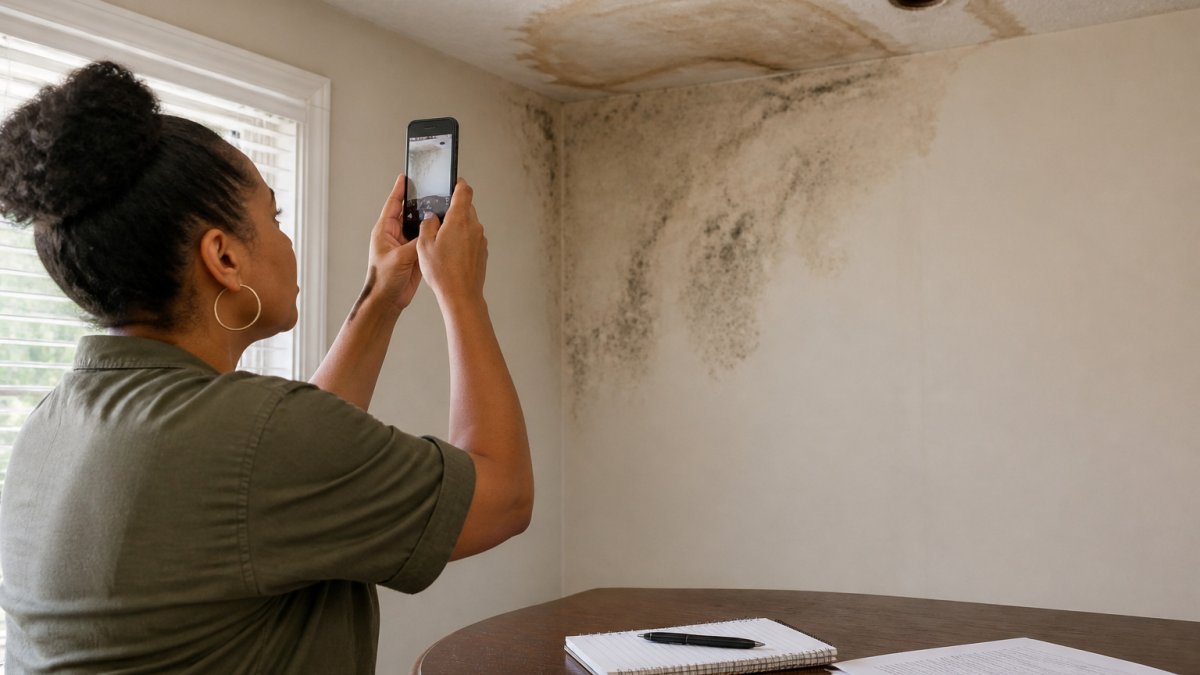
Write down when you first noticed the problem, when you reported it, and who you spoke with at the insurer. Note the date and time on each photo.
How the Claims Adjustment Process Works for Mold
Most guides stop at “file a claim and wait for the adjuster.” The part that actually decides mold claims is the documentation standard the adjuster applies, specifically, whether the file proves a sudden event rather than a gradual one. Understanding that standard before the adjuster arrives is the single biggest advantage a homeowner can have.
What the Adjuster Is Actually Looking For
When an adjuster reviews a mold claim, the central question is causation: what introduced the water, and when. A file that clearly establishes a dated, sudden event, a burst supply line, a failed water heater, a washing machine hose that let go, is far stronger than one that describes mold discovered on a wall with no identified source.
The Documentation Checklist That Proves a Sudden Event
Build the file before cleanup begins:
- Date and time of discovery, written down the same day
- Photos of the source, the burst pipe, the failed fitting, the appliance, before anything is moved
- Wide shots and close-ups of affected rooms, walls, and materials, with dates visible
Aquaflame Restores It offers free damage assessments and can provide written findings you can share with your adjuster, which helps align the professional record with your own photos and timeline.
If You Disagree With the Estimate
You are not required to accept the first estimate. For larger or disputed claims, some homeowners bring in a public adjuster, who works for the policyholder for a fee that varies by case, worth considering when the gap between the offer and the documented cost is significant. Weigh whether a public adjuster is worth it for your situation.
The Clearance-Testing Question
A question most guides skip: does insurance cover the professional testing that confirms mold is gone after remediation? The answer depends on the policy and the adjuster, but testing is often treated as part of the remediation scope when it is written into the estimate up front. Ask your remediator to include post-remediation verification in the scope of work submitted to the insurer, rather than treating it as a separate add-on after the fact.
Working With a Company That Bills Insurers Directly
Direct insurance billing reduces the back-and-forth on remediation costs, because the documentation and the invoice come from the same source and describe the same scope. Aquaflame Restores It provides direct insurance billing and IICRC-certified technicians for water and mold work, and responds 24/7 with arrival on site within one hour across metro Atlanta.
The claims file, not the mold, is what gets paid. Document the source event first, keep a dated timeline, and get the remediation scope, including clearance testing, into the estimate the adjuster reviews.
The documentation an adjuster reviews tends to decide mold claims, so the file should establish a dated, sudden event.
| Document | Why it matters |
|---|---|
| Date and time of discovery | Establishes when the problem was first noticed |
| Photos of the source | Shows the burst pipe, failed fitting or appliance |
| Wide shots and close-ups | Shows the affected rooms, walls and materials |
| Plumber’s report | Identifies the source and cause |
| Receipts for extraction and drying | Documents emergency water mitigation costs |
| Written timeline | Records reporting and insurer contacts |
| Professional assessment | Describes moisture source and extent of growth |
How Long Mold Remediation Takes and What to Expect
Timelines depend on the size of the affected area, the materials involved, and whether hidden growth is found behind walls or under flooring. Smaller surface-level jobs generally take less time than larger jobs involving containment and drying.
Aquaflame Restores It is on site within one hour, 24/7, and uses IICRC-certified technicians for water and mold work.
Next Step: Get a Free Mold Damage Assessment in Metro Atlanta
If water has caused mold in your Metro Atlanta home or business, the most useful first step is a professional look at the source and the extent of the damage. Aquaflame Restores It offers 24/7 response, direct insurance billing, and free assessments, and our team can help you document what your insurer will need. Call 678-379-8000 today for a free assessment, and visit our restoration services page to see the full range of emergency help we provide.
Frequently Asked Questions
Will insurance companies pay for mold removal?
Often only when the mold is the result of a covered, sudden event such as a burst pipe or an appliance failure that was reported promptly. Most standard homeowners policies in Georgia exclude mold caused by long-term leaks, poor maintenance, or humidity. Many policies also cap mold coverage with a separate sublimit, so the amount paid can be far less than the full remediation bill. Read your declarations page and any mold endorsement, and ask your agent to explain the limit in writing before you assume the cost is covered.
Does insurance cover mold from a pipe leak?
It can, if the pipe leak was sudden and accidental and you acted quickly to stop the water and dry the area. Insurers generally treat a burst supply line or a failed water heater as a covered peril, and mold that grows from that water may be included, subject to any mold sublimit. If the leak went unnoticed for weeks, the insurer may argue the damage resulted from neglect. Keep receipts for the plumber and any emergency water extraction, and document the timeline of when you first noticed the water.
How long does mold remediation take?
Remediation timelines depend on how much area is affected and whether the mold is hidden behind walls, under flooring, or in a crawl space. Containment, removal, cleaning, and drying all have to happen in sequence, and the schedule can extend if hidden moisture is found. Your insurer’s adjuster may need to inspect before work begins, which can add time. Aquaflame Restores It can give you a timeline after a free assessment.
What should I do if my mold claim is denied?
Ask the insurer for the denial in writing and the specific policy language it relies on. Review whether the cause was sudden or gradual, whether a mold endorsement or sublimit applies, and whether your documentation supports a covered peril. You can request a re-inspection, submit additional photos, moisture readings, or a written statement from your restoration contractor, and ask for a supervisor review. If the dispute continues, Georgia consumers can contact the Georgia Department of Insurance for guidance on the complaint process.
What should I do if I can’t afford mold removal?
Start by confirming whether any part of the damage is covered, since the claim may pay for part of the work even when mold itself is limited. Ask the remediation company about a free damage assessment so you know the actual scope before committing. Keep every estimate and invoice, and ask whether the company bills your insurer directly so you are not front-loading the full cost. Acting quickly on the moisture source usually keeps the scope, and the bill, smaller.
Georgia Office of Insurance and Safety Fire Commissioner consumer resources
EPA guidance on mold cleanup in the home
IICRC standards for water damage restoration