Last Updated: November 18, 2026
Quick Summary
To dry wet carpet in an apartment, first shut off the water source and cut power to any wet zone, then remove standing water with a wet-dry vacuum and blot with towels. Run fans angled across the carpet and a dehumidifier in a closed room, aiming to dry within 24 to 48 hours before mold starts.
- Shut off the water source and flip the breaker before stepping into any wet zone.
- Blot, do not scrub, because scrubbing pushes water deeper and frays carpet fibers.
- Point box fans across the wet carpet, not straight down, toward an open window or door.
- Most wet carpet takes 24 to 48 hours to dry with steady airflow and a dehumidifier.
- Surface feel is unreliable, so check the backing, padding, and subfloor for hidden moisture.
Table of Contents
- Step 1: Stop the Water Source and Make the Apartment Safe
- Step 2: Pull Back Furniture and Assess How Much Carpet Is Soaked
- Step 3: Remove Standing Water and Blot the Carpet
- Step 4: Move Air With Fans and Set Up a Dehumidifier for Wet Carpet
- How Long Wet Carpet Takes to Dry and How to Verify It Is Actually Dry
- Padding, Subfloor, and Mold Under Wet Carpet: What to Check
- Renter and Landlord Responsibilities for Wet Carpet in an Apartment
- When to Call Aquaflame Restores It for a Free Assessment
- Frequently Asked Questions
Step 1: Stop the Water Source and Make the Apartment Safe
The first move in how to dry wet carpet in an apartment is not the carpet at all. It is shutting off the water and killing the power to any wet zone.
Find the source and stop it:
- Under-sink leak: close the supply valve, then empty the cabinet.
- Toilet or supply line: turn the fixture valve clockwise until it stops.
- Water heater: shut the cold inlet at the tank.
- Upstairs neighbor: call building maintenance now, not later.
If water is near outlets, cords, or a light fixture, flip that breaker off before you step in. Water and live current do not mix.
Then judge the water. Clean water from a supply line is Category 1. Water from a toilet, dishwasher backup, or outside flood is contaminated and needs gloves and boots.
Georgia humidity makes this urgent. A damp apartment in July or August can grow musty odor fast. The EPA mold guidance notes that mold needs moisture, and drying within 24 to 48 hours is the goal.
Step 2: Pull Back Furniture and Assess How Much Carpet Is Soaked
Soaked carpet hides its true extent under furniture. Move couches, beds, and rugs to a dry room or onto plastic sheeting first. Lift wooden legs onto foil so they do not stain the wet fibers.
Now map the wet area by hand:
- Press a dry paper towel into the carpet every few feet.
- Mark where the towel comes up damp.
- Lift a corner and feel the carpet backing and padding.
Carpet padding holds water like a sponge and stays wet long after the surface feels dry. If the pad is soaked through, the carpet fibers are only half the problem.
Snap photos of everything before you move it. Your insurer and your landlord will both want them.
Step 3: Remove Standing Water and Blot the Carpet
Standing water comes out before anything else. Use a wet-dry vacuum or shop vacuum on the surface, working from the edges toward the center. A carpet extractor pulls more water from deep in the fibers if you have one.
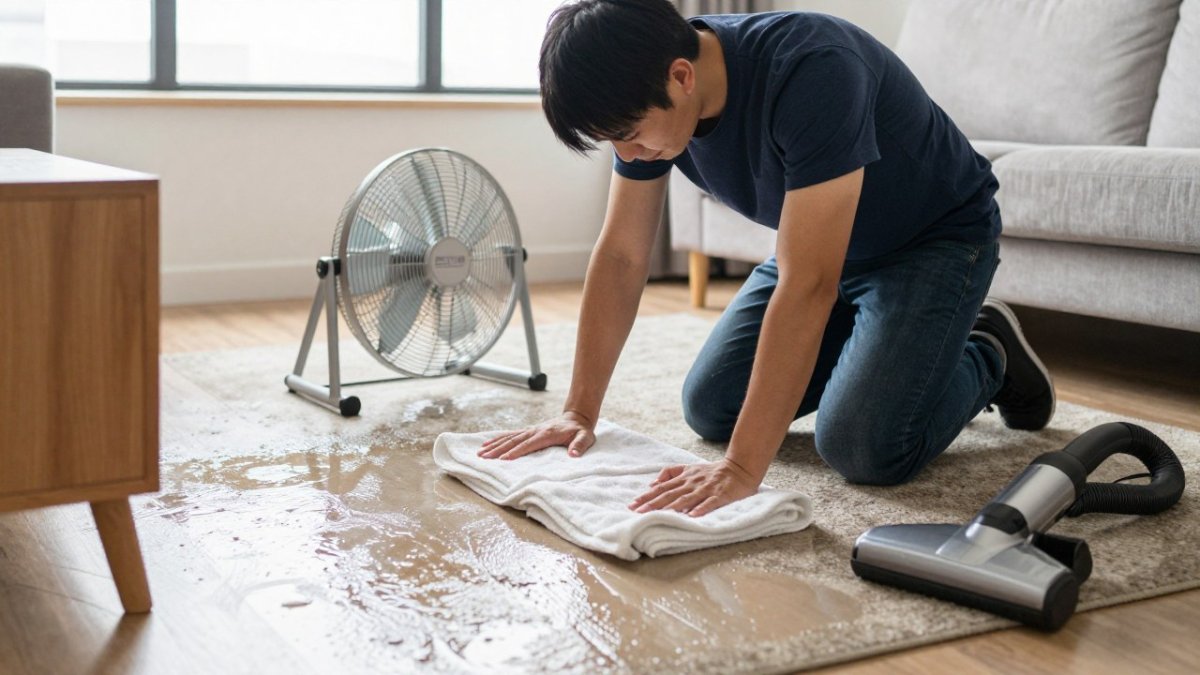
No machine? Push water toward a hard floor with a squeegee, then pick it up with towels. For a deeper walkthrough, this guide on how to remove water from carpet covers extraction methods step by step.
Blot, do not scrub. Scrubbing pushes water deeper and frays the carpet fibers. Press folded towels down with your weight, swap them when soaked, and repeat until they come up barely damp.
How to dry wet carpet without a vacuum in a small apartment
No shop vacuum is not a dead end. Blot with every towel you own, then borrow more. A clean water spill in a small area can be handled with towels, airflow, and patience. Watch out: never use a household upholstery cleaner on a soaked carpet. It adds liquid instead of removing it.
Step 4: Move Air With Fans and Set Up a Dehumidifier for Wet Carpet
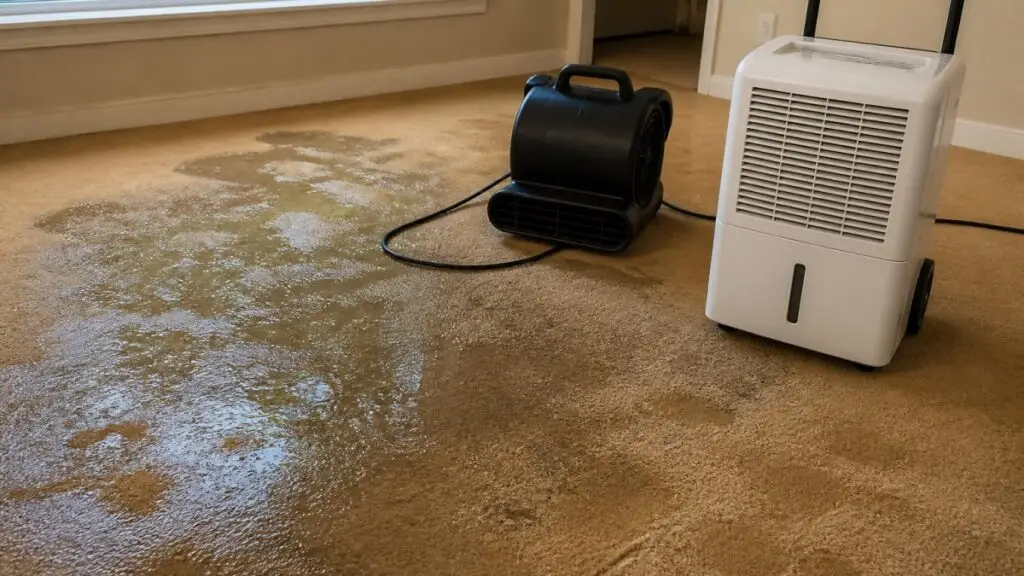
Airflow does the heavy lifting. Point box fans or a floor fan across the wet carpet, not straight down. Angle them to push damp air toward an open window or door.
A dehumidifier for wet carpet pulls moisture out of the air so the carpet can keep releasing it. Run it in the same room, close the door, and empty the tank or route the hose to a drain. In a small apartment, one unit per wet room is a sensible start.
Open windows only when outdoor conditions are suitable. On a dry, breezy Atlanta day, cross-ventilation helps. During a humid summer storm, open windows add moisture back. Keep the apartment closed and let the dehumidifier work.
Lift the carpet if you can. Pulling the carpet back off wet padding lets air reach the backing and the subfloor. That single step often saves the pad.
How Long Wet Carpet Takes to Dry and How to Verify It Is Actually Dry
Most wet carpet takes 24 to 48 hours to dry with steady airflow and a dehumidifier running in a closed room. Thick padding, a soaked subfloor, or a closed-up apartment pushes that longer.
Surface feel is a liar. Carpet fibers can feel dry to the touch while the backing, padding, and subfloor underneath are still holding water. That hidden moisture is what feeds mold and what turns a small spill into a padding replacement.
A practical verification sequence:
- Carpet surface: press a dry white paper towel into the pile in several spots and hold it for a few seconds. Any cool dampness on the towel means keep drying.
- Carpet backing: lift a corner and press the backing against your cheek or the back of your hand. Backing holds moisture longer than the pile and feels noticeably cooler when wet.
- Padding: pull back a corner and squeeze a section of pad. It should feel springy and dry, not spongy or heavy. Pad that stays damp after a full drying cycle is usually a replacement decision, not a drying one.
- Subfloor: with the carpet and pad pulled back, press a paper towel against the subfloor and check for darkening or a damp smell.
- Room air: a musty odor near baseboards, a sticky feel on interior doors, or condensation on windows means the room itself is still too humid and the dehumidifier needs more run time.
A moisture meter takes the guesswork out of all of this. Inexpensive pin-type meters read moisture content in wood subfloor and padding, and pinless meters scan the carpet surface without poking holes.
Drying milestones to track instead of a fixed clock:
- 12 hours: standing water gone, fans and dehumidifier running, carpet surface no longer squishing underfoot.
- 24 hours: surface towel test comes up dry, padding at the edges feels springy, no new musty smell.
- 48 hours: backing and pad dry to the touch, subfloor towel test clean, room air no longer sticky. If any layer fails this check, the carpet is not dry no matter how it feels.
Once the carpet passes the 48-hour check, this guide on how to sanitize carpet after a water leak explains how to clean it safely before normal use.
Padding, Subfloor, and Mold Under Wet Carpet: What to Check
Mold under wet carpet is the reason speed matters. Mold can start on damp padding and subfloor in a warm, humid apartment. Pull back a corner and inspect the pad and the subfloor beneath it.
Signs the padding needs to go:
- It crumbles or tears when lifted.
- It stays soaked after 24 hours of drying.
- It smells musty.
- Dark spots appear on the underside.
If you spot mold, this rundown of signs your carpet pad needs replacing helps you decide before it spreads. For anything beyond a small patch, or any mold you cannot see, call a professional. We limit DIY mold cleanup to small areas and recommend trained help for hidden growth.
Renter and Landlord Responsibilities for Wet Carpet in an Apartment
In an apartment, drying the carpet is only half the job.
Document before you move anything. Photograph the wet carpet, the water line on the baseboards, the source (under-sink cabinet, toilet base, water heater), and any furniture or belongings that got wet.
Know the usual split. A common pattern in metro Atlanta apartment leases looks like this:
| Situation | Who typically handles it |
|---|---|
| Sudden plumbing failure (burst supply line, failed water heater) | Landlord arranges and pays for repair; tenant reports and documents |
| Tenant-caused spill or overflow (tub, sink, pet accident) | Tenant reports immediately and helps dry; repair responsibility depends on the lease |
| Upstairs unit leak or building-wide issue | Landlord or property manager coordinates both units and the repair |
| Storm-driven water intrusion (summer downpour, window seal) | Landlord handles the building envelope; tenant documents and dries contents |
| Mold from a leak that was reported and not fixed | Landlord, with your written notice as the key evidence |
Keep drying while you wait. Reporting the leak does not pause the damage. Keep fans and the dehumidifier running, keep the room closed, and keep the wet area clear of furniture.
Check your renter’s policy. If mold becomes part of the claim, this guide on whether mold removal is covered by insurance explains what to expect before costs grow.
Document first, then move wet furniture and belongings, so the insurer and landlord can see how far the water spread.
If the water went deep, the padding is soaked, or the landlord is slow to respond, a free assessment gives you an independent record of the damage and a clear next step.
When to Call Aquaflame Restores It for a Free Assessment
Call for help when the water covers more than a small area, when the padding and subfloor are soaked, when the water is contaminated, or when mold is already visible. Those cases move past towels and fans.
Aquaflame Restores It is locally owned in Decatur and serves metro Atlanta, including DeKalb, Clayton, Cobb, and Henry counties. Our IICRC-certified technicians respond 24/7 and are on site within one hour. We offer free damage assessments, bill insurance directly, and handle contents pack-out. You can request wet carpet water removal any time.
A soaked apartment carpet rarely dries as fast as it looks, and mold does not wait for a convenient week. If the water went deep, the pad is soaked, or you smell something musty, get a trained eye on it before the damage spreads.
Frequently Asked Questions
Will a wet carpet dry on its own?
It can, but slowly and unevenly. Carpet padding holds water against the backing and the subfloor, so the surface may feel dry while moisture sits underneath. In Atlanta’s humid months, that trapped moisture keeps indoor humidity high and gives mold a head start, often within 24 to 48 hours. If you do nothing, expect a musty odor and possible mildew. Pull back furniture, extract standing water, and run fans and a dehumidifier to dry wet carpet faster than air alone would.
How long does wet carpet take to dry in an apartment?
With good airflow and a dehumidifier running, most clean-water carpet dries in 24 to 48 hours. Without equipment, it can take several days, and padding may stay damp longer than the carpet fibers. If the carpet is still wet after three days, or you smell a musty odor, stop drying and get it assessed. Hidden moisture under the carpet is the usual reason a carpet never quite dries.
Will mold grow under wet carpet?
Mold under wet carpet is a real risk when moisture sits for more than a day or two, especially in humid Georgia weather. Mold can grow on the carpet backing, padding, and subfloor where you cannot see it. Small damp spots you catch early are usually manageable with fast drying. If the wet area is larger than about 10 square feet, the water is contaminated, or you see or smell mold, call a professional rather than trying to dry it yourself.
Can you dry wet carpet without a vacuum or dehumidifier?
Yes, for small spills. Blot with towels, lift the carpet edges to let air reach the padding, open windows when outdoor humidity is low, and run box fans across the surface. This works for a small clean-water spill caught quickly. It is much slower for a soaked carpet, and it will not pull moisture out of padding or a subfloor. If the carpet is still damp after a couple of days, call Aquaflame Restores It at 678-379-8000 for a free assessment.